Blog

  • Pellet Smoker Pellets: How to Choose the Right Ones

    Pellet Smoker Pellets: How to Choose the Right Ones

    Pellet Smoker Pellets: How to Choose the Right Ones

    Disclosure: This site may earn a commission from purchases made through links in this article.

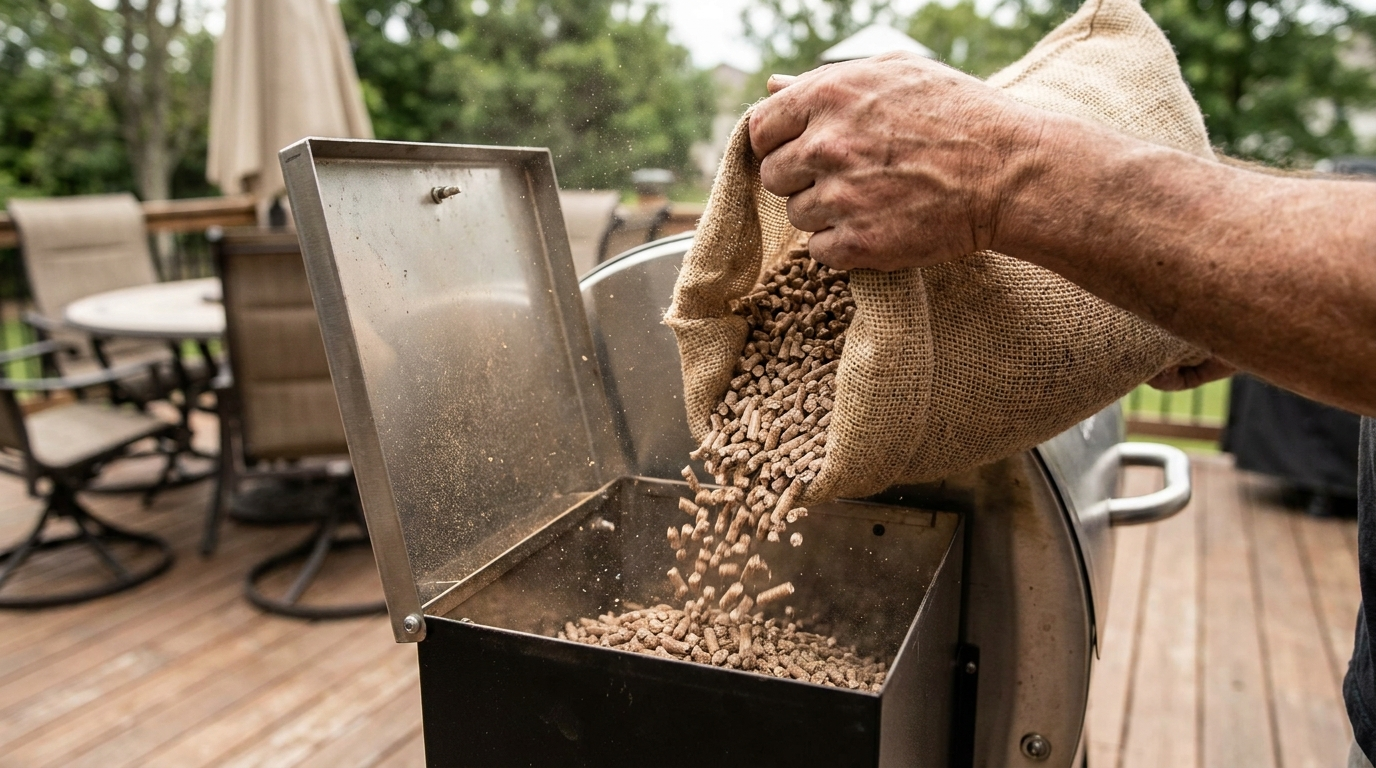
    Most people buying their first bag of pellet smoker pellets assume all wood pellets are basically the same. They’re not. The differences in smoke flavor, burn consistency, ash output, and moisture content are real enough to affect both your food and your equipment — and the industry has enough low-quality product floating around that it’s worth knowing what to look for before you spend money.

    What’s Actually Inside a Bag of Pellets

    This is where a lot of buyers get surprised. Not every bag labeled “hickory” or “apple” is 100% that species. Many budget pellets use a base wood — usually oak or alder — as filler, then add a percentage of the flavor wood listed on the bag. This isn’t inherently dishonest; oak burns cleanly and produces a neutral smoke that carries other flavors well. But it does mean you’re not always getting pure single-species smoke.

    Some brands are upfront about blends. Others imply purity they don’t deliver. If you want true single-species pellets, look for brands that explicitly state 100% hardwood with no fillers, binders, or additives. A few manufacturers actually specify this on their packaging. Most don’t.

    The other thing worth knowing: food-grade pellets are made from compressed sawdust using the wood’s natural lignin as a binder. No glue, no additives needed. If a pellet requires something extra to hold its shape, that’s a quality flag.

    Wood Species and What They Actually Do

    The flavor differences between species are real but easy to overstate. You’re not going to ruin a brisket by using hickory instead of post oak. That said, matching wood to meat still matters, especially on longer cooks where smoke accumulates.

    Strong-Smoke Woods

    • Hickory – The backbone of Southern BBQ. Assertive, savory, slightly nutty. Excellent on pork ribs, shoulders, and beef. Can overwhelm delicate proteins if you run it heavy for hours.
    • Mesquite – The most aggressive option. Burns hot and fast, and the flavor builds quickly. Better suited to shorter cooks or blended with something milder. Texans use it on beef; use it sparingly on everything else.
    • Oak – Often dismissed as a base wood, but post oak especially is genuinely great for beef. Medium smoke intensity, long burn, consistent heat. Central Texas pitmasters use it almost exclusively for a reason.

    Mild-to-Medium Woods

    • Cherry – Subtle, slightly sweet, and produces a beautiful mahogany color on poultry and pork. Works well blended with oak or hickory to add visual appeal without overpowering flavor.
    • Apple – Mild and sweet. Good on chicken, pork tenderloin, fish, and vegetables. Long cooks at lower temps let it build without going bitter.
    • Pecan – Sits between hickory and apple. Rich, slightly buttery, not aggressive. One of the most versatile options — handles brisket, ribs, and even poultry competently.

    Specialty Woods

    • Alder – Traditional Pacific Northwest choice for salmon. Light, clean smoke. Not widely used beyond fish and lighter proteins.
    • Maple – Sweet and mild. Used on pork and poultry. Produces a nice bark color.
    • Competition blends – Usually a mix of cherry, hickory, maple, and sometimes oak. Designed to be crowd-pleasing rather than bold. A reasonable default if you cook a variety of meats.

    Pellet Quality: The Details That Matter

    Moisture Content

    This is the single biggest quality variable. Pellets absorb moisture from humidity and storage conditions. High-moisture pellets produce more steam than smoke, ignite poorly, create excess ash, and can jam your auger. They also swell, which causes feed problems in the fire pot.

    Quality pellets are typically dried to a low moisture percentage. You can’t easily test this at home without a meter, but here are practical indicators: pellets should snap cleanly when bent, not bend or crumble. A clean snap indicates low moisture content. Dust at the bottom of the bag is a bad sign — it means the pellets are fragile and likely degrading.

    Pellet Diameter and Length

    Most pellets run around 6–9mm diameter. Size affects auger feed rate and burn characteristics. Mismatched pellet sizes in a bag can cause inconsistent feeding. This is more of a manufacturing consistency issue than a spec you’ll shop by, but it’s something to notice if you start getting temperature swings.

    Ash Output

    Lower-quality pellets — or pellets with bark and other debris included — produce significantly more ash. More ash means more frequent cleaning and higher risk of pot fires. Premium pellets made from debarked hardwood run cleaner. You’ll notice the difference after 10–15 hours of cook time when you pop open the fire pot.

    Storage: Most People Get This Wrong

    Pellets left in the hopper for weeks between cooks will absorb ambient moisture, especially in humid climates. Even in dry climates, temperature swings cause condensation. The result is swollen pellets, jammed augers, and the kind of erratic temperature behavior that gets blamed on the smoker itself.

    Best practice:
    – Empty the hopper after each cook if you won’t be cooking again within a few days.
    – Store pellets in an airtight container — a sealed bucket or plastic bin with a gasket lid works well.
    – Never leave an opened bag sitting on a garage floor; concrete wicks moisture.
    – Don’t mix old and new pellets. Different moisture levels cause inconsistent burns.

    This sounds like extra work, but a jammed auger mid-cook is a much bigger problem.

    How Much Smoke Flavor You Actually Get

    Here’s something worth understanding about pellet smoker pellets in general: they produce less smoke than offset stick-burners. That’s just physics. The fire pot burns at high efficiency; you’re getting mostly convection heat with a moderate smoke contribution.

    This isn’t a flaw — it’s why pellet cookers are popular for beginners and convenience-focused cooks. But if you’re coming from stick-burning and expecting the same smoke ring and intensity, you need to manage expectations or use techniques to compensate.

    To boost smoke output on a pellet smoker:
    – Run lower temps (180–225°F) during the initial phase of a cook. More incomplete combustion = more smoke.
    – Use a smoke tube filled with pellets and lit separately. This runs independently of the auger and adds considerable smoke without affecting the cook chamber temp.
    – Some smokers have a “super smoke” or “smoke boost” mode that runs the auger intermittently to generate more smoke. This actually works.

    Practical Buying Guidance

    Buy in bulk, but not before you test. A single bag is usually worth buying first to check moisture, snap, ash output, and how your particular smoker runs on it. Once you find a brand that performs well in your machine, buying 20–40 lb bags cuts your cost per cook and means you always have supply.

    Brand consistency matters more than brand prestige. The best pellet brand is one that delivers consistent quality batch to batch, not just the one with the most marketing behind it. If you notice a batch performing differently than usual — more ash, temperature swings, wet smell — trust that observation.

    Match wood intensity to cook length. Short cooks at high heat (chicken thighs at 375°F for 45 minutes) tolerate aggressive woods like hickory because there’s less time for smoke to accumulate. Long low-and-slow cooks (12-hour brisket at 225°F) require a bit more care with heavy woods. Fruit woods shine on long cooks precisely because they’re subtle enough not to become acrid over time.

    Blended pellets are underrated. A cherry-hickory blend on pork ribs — especially if you want color and flavor together — outperforms single-species hickory alone for most home cooks. Experiment with blends before chasing pure single-species performance.

    The right pellet smoker pellets for your setup depend on what you’re cooking, how your smoker feeds and burns, and how you store between cooks. Get those variables dialed in and the wood species question almost becomes secondary.
  • Pellet Meat Smoker Buyer’s Guide: What Actually Matters

    Pellet Meat Smoker Buyer’s Guide: What Actually Matters

    Pellet Meat Smoker Buyer’s Guide: What Actually Matters

    Disclosure: Some links on this page may be affiliate links, meaning we earn a small commission if you buy through them, at no extra cost to you.

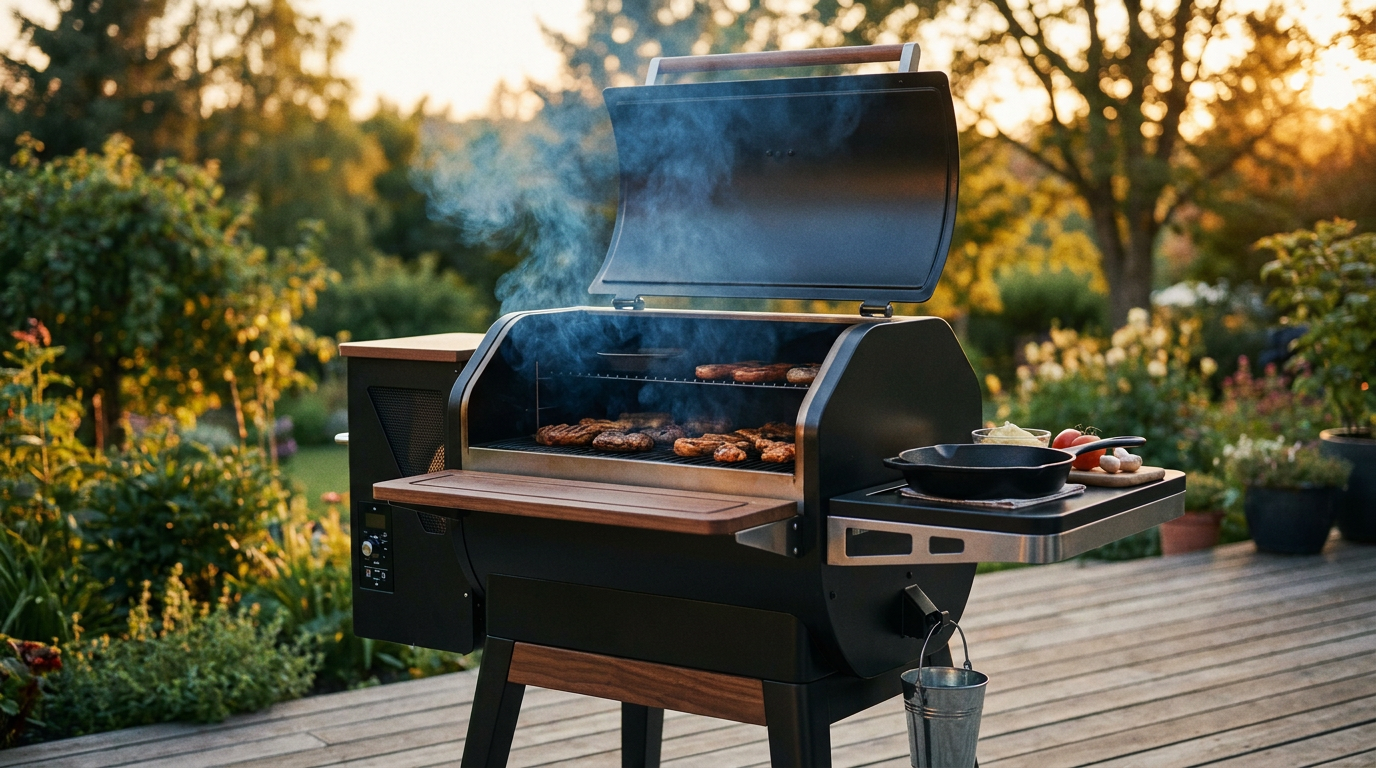
    A pellet meat smoker sits in an interesting spot — it’s not quite a set-it-and-forget-it appliance, and it’s not the hands-on fire management of an offset. It’s something in between, and understanding that middle ground is exactly what makes or breaks a purchase decision.

    I’ve run pellet smokers through everything from overnight briskets in January to competition-style pork ribs in July heat. What follows is what I actually wish someone had told me before I bought my first one.


    The Real Trade-Off: Convenience vs. Smoke Intensity

    This is the conversation nobody has clearly enough. Pellet smokers are genuinely convenient — you set a temperature, the auger feeds pellets, a fan maintains airflow, and the controller holds your target within a reasonable range. That’s real. But the smoke flavor you get is milder than a stick burner or a charcoal kamado. Not bad. Just different.

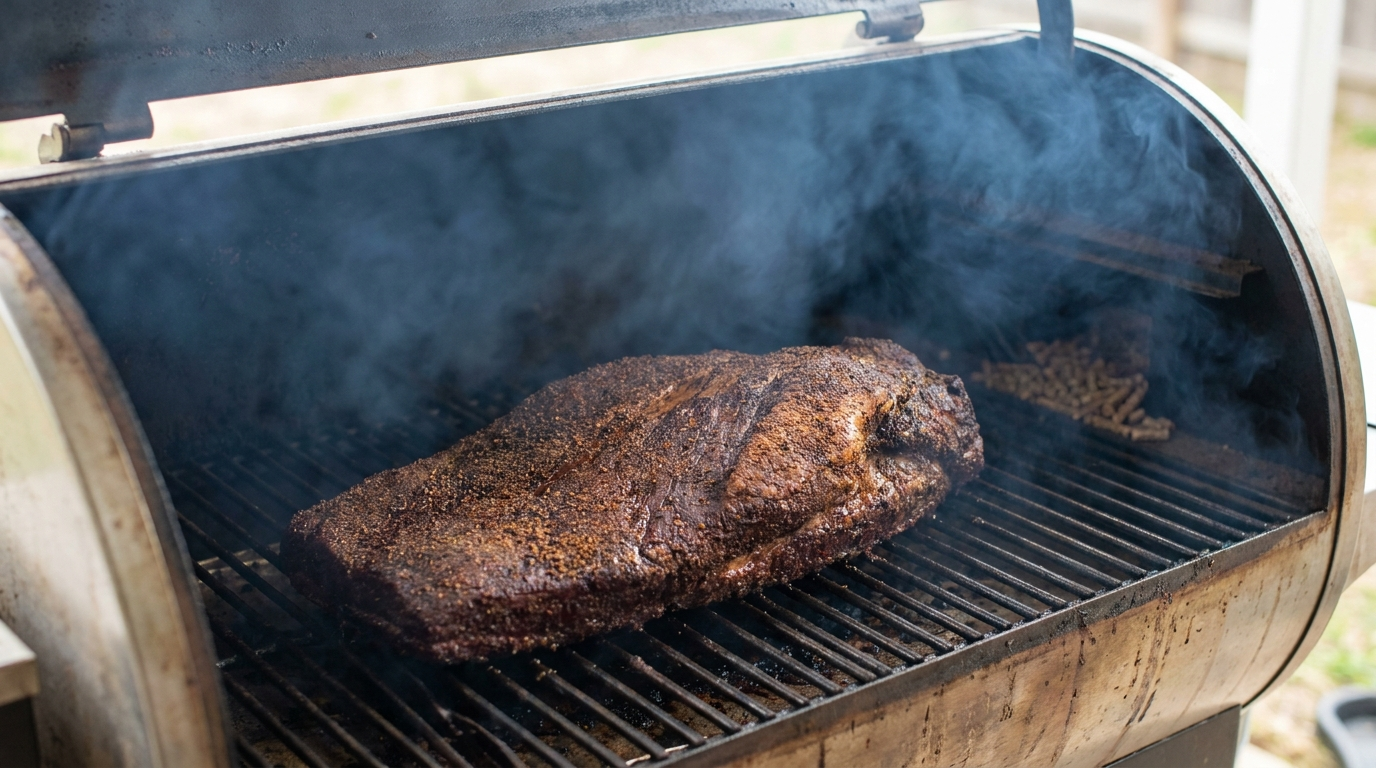
    If you’ve eaten barbecue from a well-run offset and you’re chasing that same aggressive smoke ring and bark, a pellet smoker will get you close but not identical. The fire burns cleaner and hotter on average, which means less particulate smoke on the meat. Some people prefer it. Some people buy a pellet smoker and then add a smoke tube because they want more.

    Know what you’re buying into before you buy.


    Hopper Size: Why It Matters More on Long Cooks

    Most pellet smokers ship with hoppers that hold somewhere between 15 and 20 pounds of pellets. That sounds like plenty until you’re doing a 14-hour brisket in 35-degree weather, where pellet consumption spikes because the auger is running near-constantly to maintain temperature.

    Cold weather is the real stress test. In summer, a 18-pound hopper might comfortably get you through a long cook. In winter, same cook, same smoker, you might be refilling once. Check the hopper capacity and factor in your climate.

    Some models have a hopper cleanout door at the bottom — a small feature that saves real time when you want to switch pellet flavors or store the unit. It sounds minor. After the third time scooping pellets out with a cup, you’ll disagree.


    Temperature Control: The Gap Between Spec and Reality

    Manufacturers advertise temperature variance figures, and some of those figures are accurate under ideal conditions. Real conditions are not ideal. Wind, ambient temperature, how full the hopper is, how recently you cleaned the fire pot — all of it affects temperature stability.

    What you actually want to evaluate:

    PID Controllers vs. Older 3-Position Controllers

    Older or budget pellet smokers sometimes use simple 3-position controllers (Low/Medium/High) or basic non-PID digital controllers. They work, but temperature swings of 25 degrees or more are common. A PID (proportional-integral-derivative) controller constantly adjusts the auger speed in small increments to hold temperature more precisely. The difference shows up on long cooks where a 20-degree swing in a 4-hour cook matters less than in a 12-hour one.

    Most mid-range and premium models have moved to PID. If you’re looking at a budget unit, check the controller type specifically.

    Probe Ports and Included Probes

    Every pellet smoker has a built-in temperature probe for the grate, but the quality varies. A warped or poorly placed probe reads inaccurate temps. Bring your own quality leave-in probe and verify against the controller display — you’ll often find a 10 to 20 degree discrepancy. That’s not a defect, it’s reality, and knowing your actual cook chamber temperature matters.


    Cooking Area: Think in Square Inches, Not Racks

    Manufacturers love to advertise multiple racks. Two racks sounds like a lot. But if the upper rack sits so close to the lid that you can’t fit a full packer brisket on it flat, that rack is essentially decorative for big cuts.

    Measure the primary cooking grate. That’s your working area for anything over 4 inches tall. The upper rack is useful for ribs, chicken pieces, sausages — anything that doesn’t need height clearance. Plan your purchase around what you actually cook most, not the total advertised square inches.


    Pellet Quality and Flavor: Not All Bags Are Equal

    The pellets you burn directly affect flavor, temperature performance, and ash production. 100% hardwood pellets from a reputable brand burn cleaner and produce less ash than blended or lower-quality pellets that use filler wood or binders. More ash means more frequent cleanouts and a higher chance of fire pot clogging.

    For flavor, the wood species makes a real but not dramatic difference. Hickory and mesquite are more assertive. Cherry and apple are milder and good for poultry. Pecan sits in the middle and pairs well with almost everything. The effect is subtler on a pellet smoker than a stick burner — don’t overthink it, but don’t buy cheap pellets thinking it doesn’t matter at all.

    Store pellets in a sealed container. Pellets that absorb moisture crumble, jam the auger, and make a mess. A simple five-gallon bucket with a lid is enough.


    Build Quality Markers Worth Checking

    You can tell a lot from a few specific things:

    • Lid fit and seal: A warped lid loses heat and smoke from day one. Press down on the lid at the store or check review photos carefully.
    • Leg stability: Thin legs with cheap welds flex. You don’t want a smoker rocking when you’re pulling a 200-degree brisket off the grates.
    • Grate material: Porcelain-coated grates are easier to clean. Cast iron grates retain and radiate more heat but require maintenance to prevent rust.
    • Drip tray design: A flat, slide-out drip tray is far easier to clean than a built-in sloped system. Grease fires are a real hazard if the tray isn’t maintained — this is where most pellet smoker fires start.

    Wi-Fi and App Control: Useful, Not Essential

    A lot of pellet smokers now include Wi-Fi connectivity and app control. The ability to monitor grate temperature and internal meat temp from your phone is genuinely useful for long overnight cooks. You can check progress without going outside at 2 a.m.

    But app quality varies wildly. Some are stable and well-designed. Others crash, disconnect, or lag in ways that make them more frustrating than useful. If app connectivity is a priority, check user reviews specifically about the app — not just the smoker overall.

    Adjusting temperature remotely is convenient. Relying entirely on an app to manage a fire is not something I’d recommend as a primary workflow. Treat it as a monitor with bonus features.


    Sizing It Right for Your Household

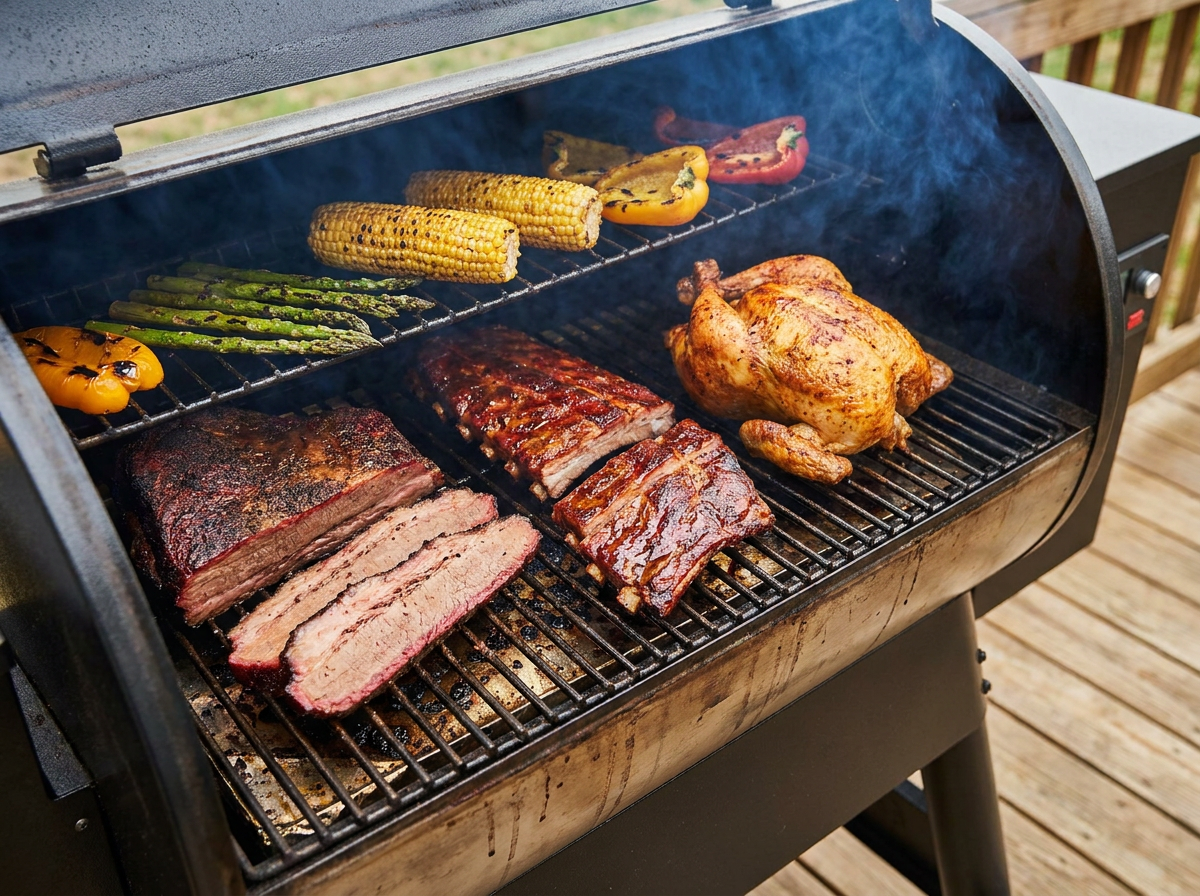
    A compact pellet meat smoker — roughly 450 to 500 square inches of primary cooking area — handles most backyard needs: a full brisket, two racks of ribs, a whole chicken. Unless you’re regularly cooking for large groups or doing competition volume, you probably don’t need the largest unit on the market.

    Larger smokers use more pellets and take longer to come to temperature. They also cost more to run. Buy for how you actually cook 80% of the time, not your theoretical peak use case.


    One Thing Most Buyers Skip: Burn-In and Break-In

    Before your first actual cook on any new pellet meat smoker, run a burn-in cycle. Load the hopper, let the smoker run at a high temperature (around 350–400°F) for 30 to 45 minutes with nothing on the grates. This burns off manufacturing residue, oils, and coatings. Skip it and that flavor ends up on your first brisket.

    Also learn where your smoker runs hot. Every unit has hot spots — usually near the fire pot or near the back wall. Know them, and rotate meat accordingly on longer cooks.

    The best pellet smoker for you is the one you actually understand how to use. Spend the first few cooks paying attention rather than just trusting the controller, and you’ll get dramatically better results from whatever unit you buy.

  • Pellet Grill Buying Guide: Everything You Need to Know

    Pellet Grill Buying Guide: Everything You Need to Know

    Disclosure: This site earns commissions from qualifying purchases made through links on this page.

    Pellet Grill Buying Guide: Everything You Need to Know

    If you’ve been scrolling through backyard cooking forums or watching competition BBQ videos, chances are you’ve seen a pellet grill front and center. These versatile outdoor cookers have exploded in popularity over the last decade, and for good reason — they combine the low-and-slow capability of a traditional smoker with the convenience of a set-it-and-forget-it appliance. But with dozens of brands and models on the market, knowing what to actually look for before you spend your money can be the difference between a purchase you love and one that collects dust in the garage.

    This guide breaks down exactly how pellet grills work, what features matter, who they’re best for, and what trade-offs you should know before buying.


    How a Pellet Grill Works

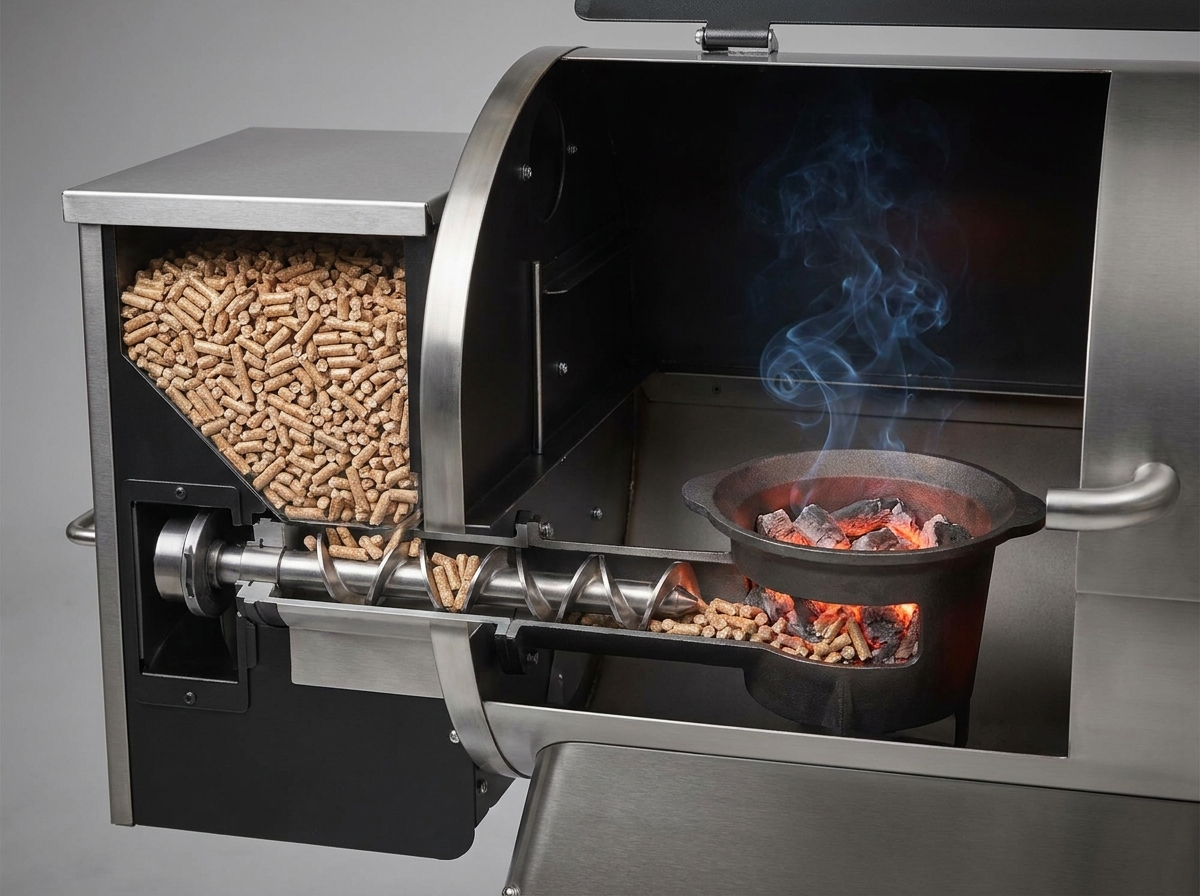
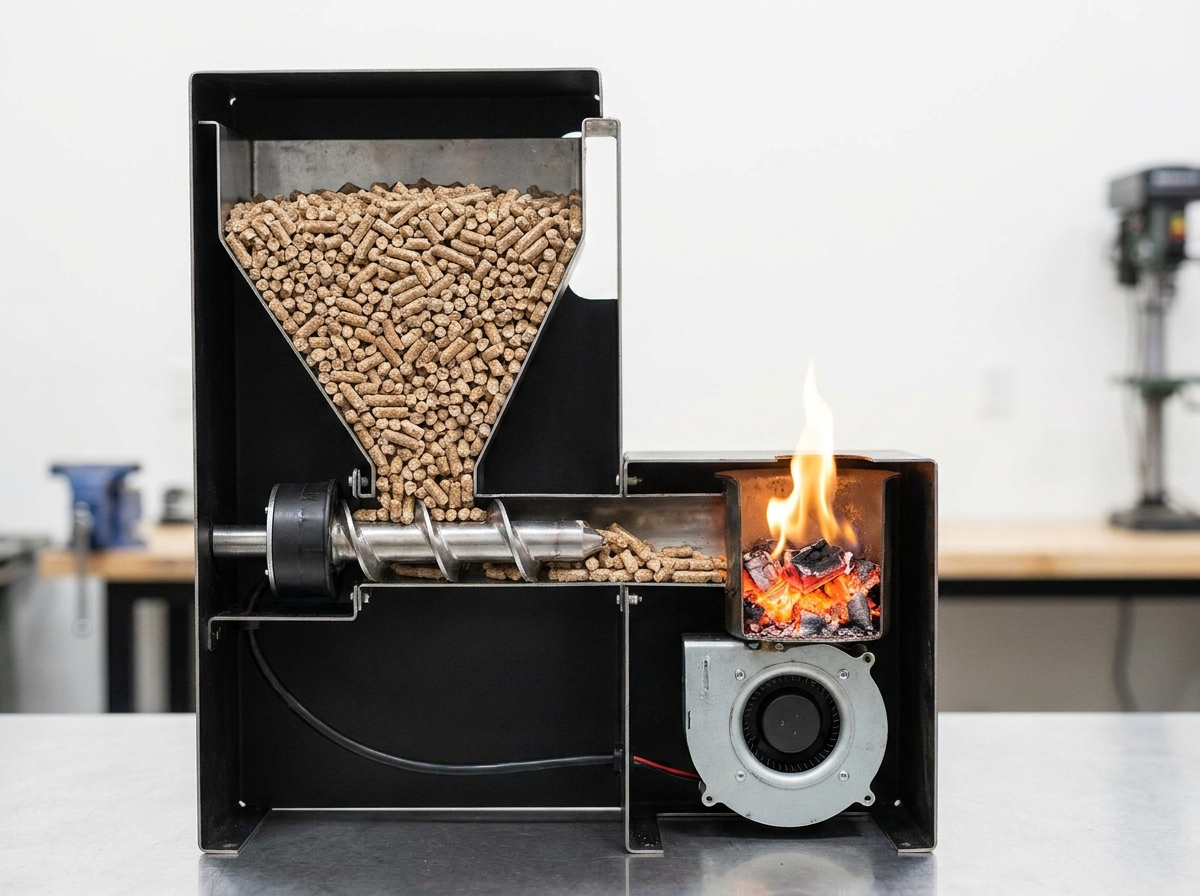
    A pellet grill runs on compressed hardwood pellets — typically made from hickory, cherry, apple, mesquite, or a blend — stored in a hopper on the side of the unit. An electric auger automatically feeds pellets from the hopper into a fire pot at the bottom of the cooking chamber. An igniter rod lights the pellets, and a fan circulates the heat and smoke throughout the cooking space.

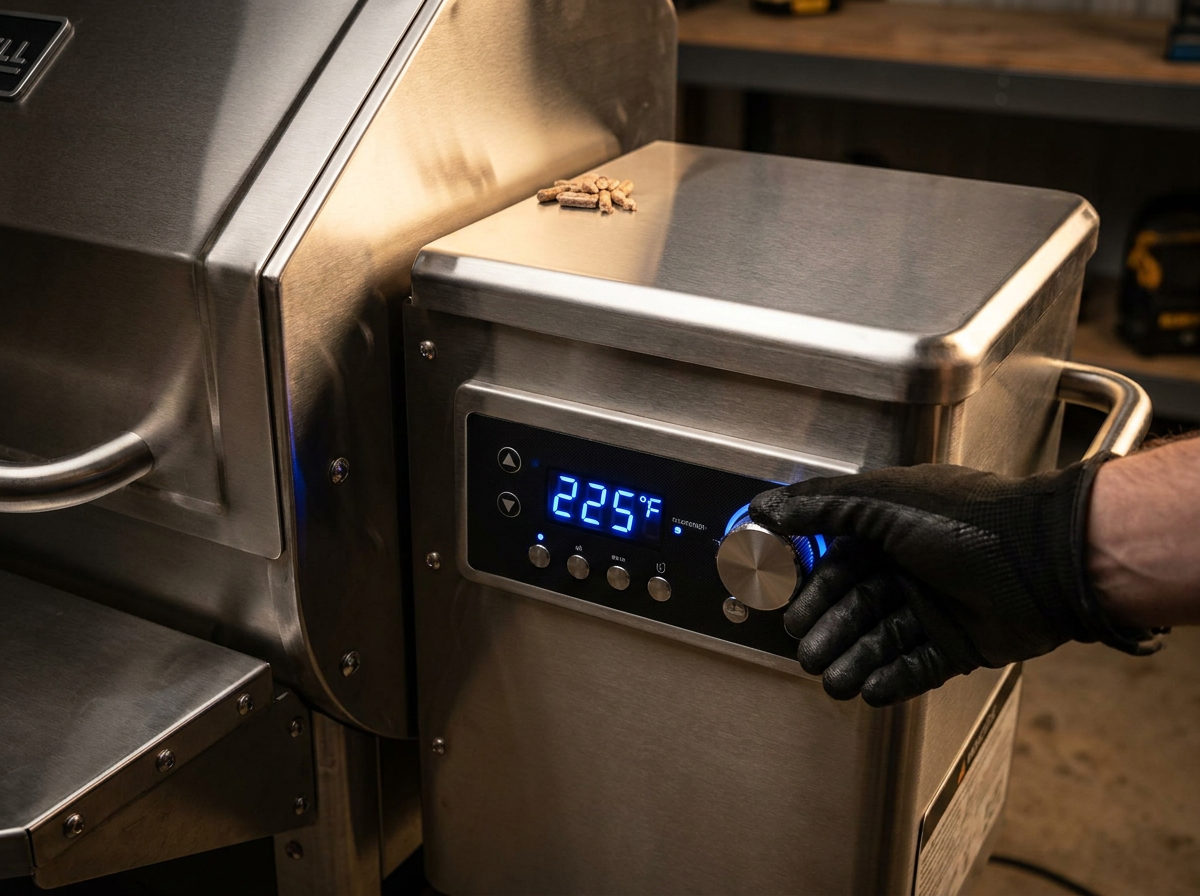
    The entire process is regulated by a digital controller, which works like a thermostat. You set your target temperature, and the controller adjusts the auger speed and fan to maintain it. Most modern units hold temperature within 10–25°F of your target, though higher-end models can be even tighter.

    Because everything is automated, you spend far less time babysitting the fire compared to an offset smoker or charcoal setup. That said, pellet grills do require electricity to operate, so they’re not ideal for off-grid situations.


    What You Can Cook on a Pellet Grill

    pellet grill

    One of the biggest selling points is versatility. A quality pellet grill can function as:

    • A smoker for brisket, ribs, pulled pork, and whole chickens
    • A roaster for prime rib, turkey, and vegetables
    • A baker for breads, cobblers, and even pizza
    • A grill for burgers, steaks, and chops — though with some limitations (more on that below)

    Low-and-slow cooks between 180°F and 250°F are where pellet grills truly shine. Smoke flavor output is generally milder and cleaner than traditional stick burners, which many backyard cooks actually prefer. If you want heavier smoke penetration, cooking at lower temperatures for a longer period helps.

    The High-Heat Limitation

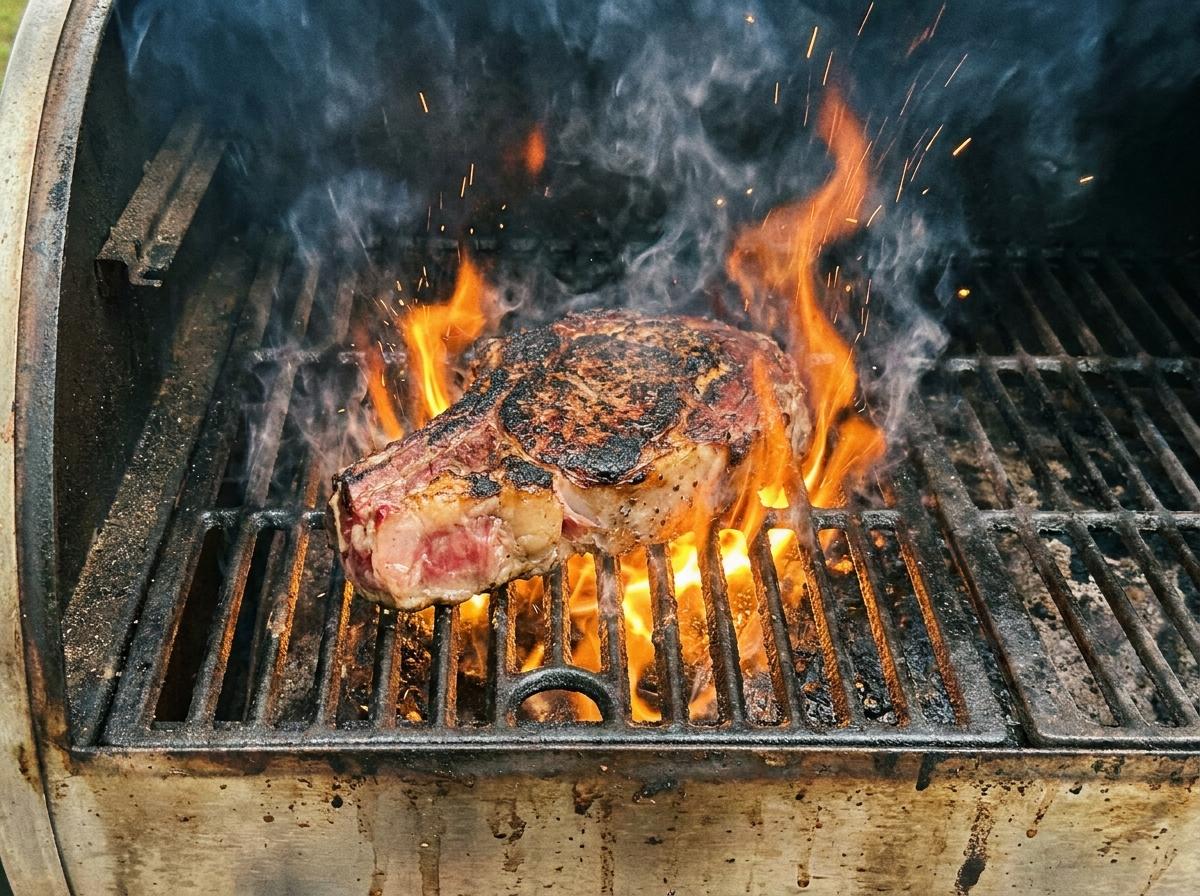
    This is the most important trade-off to understand before buying. Most pellet grills max out around 500°F–600°F. Traditional charcoal or gas grills can reach 700°F+ at the grate level, which is what creates the hard sear and char marks on a steak.

    Some manufacturers address this with direct-flame access modes, sear boxes, or special grate designs that allow pellets to flame up more directly. If searing is a priority for you, look specifically for models that advertise direct-flame or high-heat searing capability — and test that claim carefully in your research.


    Key Features to Evaluate

    pellet grill

    1. Temperature Range and Consistency

    Look for a unit with a wide temperature range — ideally from around 160°F up to at least 500°F. Consistency matters more than the advertised range, so check third-party reviews that document actual temperature variance across the cooking surface. Hot spots near the edges or near the fire pot are common in cheaper units.

    2. Cooking Area

    Cooking area is measured in square inches and usually includes both the main grate and an upper rack. Think about how much food you typically cook at once:

    • Under 500 sq in: good for 1–3 people or occasional use
    • 500–800 sq in: solid for families and regular entertaining
    • 800+ sq in: ideal for large gatherings, competition cooks, or serious enthusiasts

    Keep in mind that upper warming racks often run at different temperatures than the main grate, so they’re better for finishing than for primary cooking.

    3. Hopper Capacity

    A larger hopper means longer unattended cooks. For overnight briskets or pork shoulders that can run 12–16 hours, a hopper that holds 20+ pounds of pellets is genuinely useful. Smaller hoppers may need a mid-cook refill.

    4. Build Quality and Materials

    Thicker steel holds temperature better and resists warping over time. Look for heavy-gauge steel construction, quality welds, and sturdy hinges. Stainless steel internals are easier to clean and more corrosion-resistant. Painted exteriors can chip and rust — powder-coated finishes tend to hold up better.

    5. WiFi and Smart Controls

    Many mid-range and premium pellet grills now include WiFi connectivity, allowing you to monitor and adjust temperature from your phone. This is genuinely useful for long smokes — you can sleep through a brisket cook without walking outside to check. If you cook overnight or want remote monitoring, this feature is worth prioritizing.

    6. Ash and Grease Management

    Cleanup is part of the ownership experience. Look for units with a dedicated ash cleanout system (a drawer or trap door rather than having to scoop ashes manually) and a grease management system that channels drippings away from the fire pot into a catch bucket. Models that are easier to clean simply get used more often.

    7. Pellet Purge or Changeover System

    If you like to swap pellet flavors between cooks, a purge system that empties the auger and fire pot quickly is a nice-to-have feature. Without it, you’ll burn through half a hopper of old pellets before the new wood flavor kicks in.


    Pellet Quality Matters Too

    pellet grill

    Your results are only as good as your fuel. Use food-grade, 100% hardwood pellets without fillers or binders. Lower-quality pellets can produce excess ash, inconsistent burns, and off-flavors. Premium pellets burn cleaner and give you better temperature control. It’s worth spending a little more on pellets — don’t buy the cheapest option you find.

    Store pellets in a dry, sealed container. Moisture is the enemy: wet pellets swell, jam the auger, and burn poorly.


    Who Should Buy a Pellet Grill?

    A pellet grill is an excellent match if you:

    • Want genuine wood-smoked flavor without mastering fire management
    • Cook for families or groups regularly
    • Value convenience and automation over hands-on involvement
    • Want one versatile outdoor cooker that handles smoking, roasting, and baking
    • Are upgrading from a gas grill and want to add real smoke flavor to your repertoire

    It may not be the right fit if you:

    • Primarily want to sear steaks over high, direct heat (consider pairing with a charcoal grill or flat-top)
    • Cook in locations without access to electricity
    • Prefer the hands-on craft of managing a traditional offset or charcoal smoker
    • Are on a tight budget (entry-level pellet grills exist, but quality drops significantly at the lowest price points)

    Budget Tiers: What to Expect

    Without naming specific prices (which change frequently), the pellet grill market generally breaks into three tiers:

    Entry Level: Basic digital controllers, thinner steel, smaller hoppers, limited temperature ranges. Fine for casual use and learning the format, but expect less consistency and durability.

    Mid Range: Better build quality, wider temperature ranges, more accurate controllers, larger hoppers. This is where most buyers find the best value. WiFi connectivity often starts appearing here.

    Premium: Heavy-gauge steel, excellent temperature consistency, large cooking areas, advanced controllers with app integration, better warranties. Worth it for frequent cooks and enthusiasts who will use the grill multiple times a week.


    Final Buying Checklist

    Before you click buy, run through these questions:

    • [ ] Does the cooking area fit my typical batch size?
    • [ ] Does it reach high enough temps for the way I cook?
    • [ ] How is the ash and grease cleanup system rated?
    • [ ] Is the hopper large enough for my longest planned cooks?
    • [ ] Do I want WiFi monitoring, and does this model include it?
    • [ ] What does the warranty cover, and for how long?
    • [ ] Is replacement parts and customer support easily accessible for this brand?

    A pellet grill is one of the most approachable ways to get into serious backyard BBQ without a steep learning curve. Do your research on the specific model you’re considering — look for real-world long-term reviews, not just first impressions — and you’ll end up with an outdoor cooker that genuinely changes how you cook all year long.

  • Pellet Smoker Buying Guide: What Actually Matters

    Pellet Smoker Buying Guide: What Actually Matters

    Pellet Smoker Buying Guide: What Actually Matters

    Disclosure: This site may earn a commission from purchases made through links in this article.

    A pellet smoker is one of the easiest ways to get into low-and-slow cooking — but easy doesn’t mean simple to buy. The category has exploded in the last decade, and the options range from genuinely great to deeply frustrating. Before you spend a few hundred (or a few thousand) dollars, there are things you need to understand about how these cookers actually work, where manufacturers cut corners, and what separates a machine you’ll love from one that collects dust.


    How a Pellet Smoker Actually Works

    Wood pellets — compressed sawdust, usually without binders — sit in a hopper on the side of the grill. An auger motor feeds them at a controlled rate into a burn pot. An igniter rod lights the pellets, a fan feeds the fire oxygen, and a temperature probe in the cooking chamber tells the controller to speed up or slow down the auger. That feedback loop is what gives you hands-off temperature control.

    Sounds foolproof. And mostly it is. But the weak points are predictable once you know the system:

    • The controller and temperature probe determine how accurately the grill holds temperature. A cheap controller swings 25–30°F above and below your set point. Better ones stay within 5–10°F.
    • The fan and burn pot design affect how cleanly the pellets combust. Poor combustion = bitter creosote flavor, not smoke flavor.
    • The auger and hopper can jam with sawdust fines, especially if you buy low-quality pellets or store them somewhere humid.

    None of this disqualifies pellet cookers. It just means buying the right one matters more than the marketing suggests.


    Smoke Flavor: The Honest Truth

    pellet smoker

    This is the conversation nobody wants to have. A pellet smoker produces less smoke flavor than an offset smoker, full stop. The efficient, controlled combustion that makes temperature management easy also burns cleaner — which means less smoke output.

    That’s not a dealbreaker. Ribs, pork shoulder, and chicken cooked on a pellet grill taste great. But if you’ve eaten brisket from a well-managed stick burner and that deeply smoky bark is what you’re chasing, a pellet cooker won’t replicate it exactly.

    Some manufacturers address this with dedicated smoke modes or “super smoke” settings that run the auger in a way that creates more smoldering and less efficient burn. These work, to a degree. You’ll get noticeably more smoke flavor at lower temps (180–225°F) than at 275°F+. Starting your cook cold, straight from the fridge, also helps — the meat absorbs more smoke before the surface dries out.

    Pellet choice matters too. Pure hardwood pellets from reputable brands give you cleaner flavor and more consistent burns than blended or flavored pellets with fillers.


    Temperature Range: Don’t Ignore the High End

    pellet smoker

    Most pellet grills top out somewhere between 450°F and 500°F. A handful go higher. This matters if you ever want to sear a steak properly.

    At 450°F, you can get a decent crust on a steak if you give it time — but it’s not the same as a ripping-hot cast iron or charcoal grill. Some models include a direct-flame sear zone where a sliding plate over the burn pot lets you hit higher temperatures right above the fire. It works. The sear zone is small, and it requires a bit of timing, but you can get legitimate crust.

    If searing matters to you, look for models with that direct-access feature, or plan to use a cast iron skillet in a very hot oven for finishing. Buying a pellet smoker expecting it to replace your charcoal grill for steaks will disappoint you.


    Build Quality: Where Budget Models Fall Short

    pellet smoker

    The price range is wide, and build quality differences are real. Here’s what to look for:

    Lid and Body Construction

    Thicker steel holds heat better and warps less over time. Cheap units with thin-gauge steel can develop gaps at the lid after a season or two, making temperature control worse. Lift the lid at a store if you can — it should feel substantial, not flimsy.

    Hopper Capacity

    A bigger hopper means fewer refills during a long cook. On an overnight brisket that runs 12–14 hours, running out of pellets partway through isn’t just inconvenient — it can ruin the cook. Many mid-range models hold enough for an overnight cook at 225°F; budget models sometimes don’t. Check the stated capacity and do the math: a 225°F cook burns roughly 1–2 lbs of pellets per hour depending on ambient temperature.

    Grease Management

    Every pellet grill has a grease drainage system. Some funnel drippings into an easy-to-clean bucket. Others route grease toward the burn pot, which is a fire hazard if you don’t clean regularly. Ask specifically how the grease drains before you buy.

    Wifi and App Control

    Higher-end models offer app connectivity that lets you monitor and adjust temperature from your phone. Genuinely useful on a long cook. The reliability of these systems varies; some are rock-solid, others drop connection constantly. Read recent owner reviews specifically about the app before paying the premium for it.


    Sizing It Right

    Cooking surface is measured in square inches, and manufacturers inflate this number by including upper warming racks. Those racks are useful for holding rolls or keeping things warm, but they’re not equivalent to main-grate space.

    For a family of four cooking occasionally, a main grate in the 400–500 square inch range is generally enough. If you cook for crowds, do whole hogs, or want to run multiple large cuts simultaneously, go bigger — but understand that bigger also means more pellet consumption and longer warm-up time.

    Narrow, deep cooking chambers have hot and cold spots. Wider, shallower designs tend to cook more evenly. If you’re cooking multiple racks of ribs or a full packer brisket, double-check that the interior dimensions actually accommodate what you want to cook, not just the total square inch number.


    Maintenance Reality

    Pellet smokers need more regular cleaning than a gas grill. Ash accumulates in the burn pot and needs to be vacuumed out — some grills have a cleanout system, others require manual scooping. Grease builds up on the heat deflector and drip pan. Ignoring this long enough leads to grease fires.

    Plan for a light cleanout every few cooks and a full deep clean every 10–15 hours of use. It takes maybe 20–30 minutes. A small shop vacuum designed for ash makes the burn pot job much faster; it’s worth buying one if you don’t have it already.

    Storage matters in wet climates. Pellets left in a hopper exposed to humidity will absorb moisture, swell, and jam the auger. If you live somewhere rainy, either empty the hopper after each cook or buy a grill with a tight-sealing hopper lid. A weatherproof cover for the whole unit is worth the money regardless of where you live.


    What to Actually Spend

    The budget end of the market has improved. Entry-level pellet grills from established brands can turn out excellent food, and for someone who cooks a couple of times a month, the compromises — thinner steel, basic controller, smaller hopper — are manageable.

    The jump to mid-range buys you meaningfully better temperature control, more cooking space, and better build quality. That’s where most serious backyard cooks land and don’t regret it.

    Premium models add wifi, better searing capability, larger hoppers, and heavier construction. If you cook frequently, do long overnight cooks, or just want something that’ll last 10+ years without issue, the premium price is defensible.

    Skip models from brands with no customer service infrastructure. When an auger motor or igniter rod fails — and eventually it will — you need replacement parts to actually exist and ship promptly. Stick to brands that have been around long enough to have that supply chain in place.

    One last thing: buy the right pellets. Your cooker is only as good as its fuel. Cheap pellets with fillers burn inconsistently, produce more ash, and can introduce off-flavors. It’s a small ongoing cost that has a disproportionate impact on results.

  • Traegers Explained: What to Know Before You Buy

    Traegers Explained: What to Know Before You Buy

    Traegers Explained: What to Know Before You Buy

    Affiliate disclosure: This site may earn a commission if you purchase through links on this page, at no extra cost to you.

    If you’ve spent any time researching backyard cooking, you’ve almost certainly stumbled across traegers. Traeger Grills is the company that essentially created the mainstream pellet grill market, and its name has become so synonymous with the category that many people use “Traeger” the way they use “Kleenex” — as a stand-in for the entire product type. But before you hand over your credit card, it pays to understand exactly what you’re buying, how these grills differ from one another, and whether a pellet grill is actually the right tool for your backyard.


    How Traeger Grills Actually Work

    Traeger pellet grills are wood-fired convection ovens that happen to live outside. Here’s the basic cycle:

    1. Hardwood pellets (sold separately in flavors like hickory, apple, mesquite, and cherry) sit in a hopper on the side of the grill.
    2. An auger — a motorized screw — feeds pellets at a controlled rate into a fire pot.
    3. A hot rod igniter lights the pellets, and a fan circulates heat and smoke throughout the cooking chamber.
    4. A digital controller reads an internal temperature probe and adjusts the auger speed to maintain your target temperature.

    The result is a set-it-and-forget-it cooking experience that can smoke low-and-slow for hours or crank up to searing temperatures depending on the model. This is why traegers appeal to beginners and experienced pitmasters alike.

    What a Pellet Grill Does Well

    • Long, low-temperature smoking (brisket, ribs, pork shoulder)
    • Roasting whole chickens, prime rib, and vegetables
    • Baking (yes, really — pizza, cobblers, bread)
    • Consistent, repeatable results with minimal babysitting

    Where a Pellet Grill Has Limits

    • Achieving a deep, dark sear on steaks requires high-heat models or a cast-iron accessory
    • Smoke flavor is present but milder than offset or charcoal smokers
    • Pellets cost more per cook than propane or charcoal
    • Requires electricity to run

    The Traeger Lineup: How the Models Are Organized

    Traeger organizes its grills into a few distinct series. Understanding these tiers saves you from either overspending or buying something that won’t meet your needs.

    Pro Series

    This is Traeger’s entry point for most buyers. Pro grills offer solid build quality, WiFIRE connectivity (allowing you to monitor and adjust temperatures from your phone), and enough cooking space for a typical family. There are two primary sizes in this tier, differentiated mainly by cooking area. If you’re new to pellet grilling and cook for four to six people regularly, the Pro Series is often the sweet spot.

    Ironwood Series

    The Ironwood sits in the middle of the lineup and adds meaningful upgrades over the Pro. The most notable is downdraft exhaust technology, which circulates smoke more efficiently around the food for better smoke absorption. It also includes a larger pellet hopper, a side shelf, and a more robust double-wall construction that improves heat retention in cold weather. Serious backyard cooks who want better smoke output and don’t want to go all-in on the flagship tier often land here.

    Timberline Series

    The Timberline is Traeger’s premium tier. It features full stainless steel construction, multiple tiers of cooking grates, an integrated meat probe system, and the most advanced app connectivity Traeger offers. The newer Timberline models added an induction cooktop side burner, which is a genuinely useful feature for making sauces or finishing dishes. If you’re cooking for large groups regularly or want the most durable, feature-rich pellet grill Traeger makes, this is it.

    Ranger and Tailgater (Portable)

    Traeger also makes portable units for camping, tailgating, or smaller patios. These run on the same pellet system but sacrifice cooking area and top-end heat capability for portability. They’re a genuine product with a real use case, not an afterthought.


    Key Features to Compare When Shopping Traegers

    Cooking Area

    Measured in square inches, this determines how much food you can cook at once. Think about your realistic use case: a weeknight cook for a family of four needs far less space than a weekend cookout for twenty people.

    Hopper Capacity

    A larger hopper means fewer refills during long cooks. For a 12-hour brisket, this matters. Ironwood and Timberline models have significantly larger hoppers than the base Pro.

    WiFIRE App Connectivity

    All current Traeger models include WiFi-enabled app control. The app lets you set temperatures, monitor food probes, adjust smoke levels, and access guided recipes. In practice, the app works well for monitoring but can occasionally be finicky during firmware updates — a common complaint worth knowing about.

    Maximum Temperature

    Most traegers top out between 500°F and 550°F. That’s enough for roasting but not quite the screaming 700°F+ you’d get from a gas grill for searing. If searing steaks is a priority, look for models with a “Super Smoke” mode and consider adding a GrillGrate accessory.

    Build Quality and Materials

    Higher-tier models use thicker steel and better insulation. If you live somewhere with cold winters and plan to cook year-round, the Ironwood or Timberline’s superior insulation is a practical benefit, not just a luxury.


    Traeger vs. the Competition: Is It the Best Pellet Grill?

    Traeger invented the category, but it no longer owns it. Brands like Weber (SmokeFire), Camp Chef, Pit Boss, Green Mountain Grills, and Recteq all make competitive pellet grills — several of which offer comparable or superior features at lower price points.

    Where Traeger wins:
    – Brand support, warranty service, and wide availability of parts
    – A mature app ecosystem with an extensive recipe library
    – Consistent quality control across the lineup
    – Resale value holds reasonably well

    Where competitors can win:
    – Pure value per dollar (especially Pit Boss and Camp Chef at the entry level)
    – Searing performance (Camp Chef’s Slide and Grill system is a genuine differentiator)
    – Recteq’s build quality at the premium level is a legitimate alternative to Timberline

    The honest answer: Traeger makes excellent grills, but you’re partly paying for brand recognition. If budget is tight, a competing brand may give you more grill per dollar. If you want the ecosystem, warranty peace of mind, and don’t mind the premium, traegers are a safe, quality choice.


    What to Buy With Your Traeger

    A few accessories make a genuine difference:

    • Traeger-brand pellets or quality third-party pellets: Pellet quality directly affects flavor and burn efficiency. Avoid cheap pellets with excessive filler — they produce more ash and can cause temperature inconsistency.
    • A reliable instant-read thermometer: The built-in probes are useful, but a fast, accurate handheld thermometer (like a Thermapen) is still the gold standard for checking doneness.
    • Grill covers: These are worth buying for any outdoor grill. Traeger makes model-specific covers, and they’re reasonably priced.
    • GrillGrates: Aftermarket grates that sit on your existing cooking surface and dramatically improve searing performance.

    Practical Tips Before You Buy

    Buy from an authorized dealer. Traeger’s warranty requires purchase from an authorized retailer. Buying from a third-party marketplace seller can complicate warranty claims.

    Factor in ongoing pellet costs. A long smoke can burn through a meaningful amount of pellets. This isn’t a deal-breaker, but it’s a real operating cost to factor into your decision.

    Measure your space. Traegers are larger than they appear in photos. Check the assembled dimensions — including the hopper width — against your patio, deck, or storage area before ordering.

    Consider seasonality. If you live in a cold climate, higher-tier models with better insulation will maintain temperatures more reliably and use fewer pellets in winter.


    The Bottom Line

    Traeger makes genuinely excellent pellet grills backed by a mature support network, a solid app, and years of proven reliability. The Pro Series is the right starting point for most first-time buyers. Move up to the Ironwood if better smoke performance and larger capacity matter to you, and consider the Timberline only if you’re cooking frequently for crowds or want the best build quality Traeger offers.

    Do your homework on competing brands before committing — but if you land on a Traeger, you’re buying into a well-established, quality product that has earned its reputation in backyards across the country.