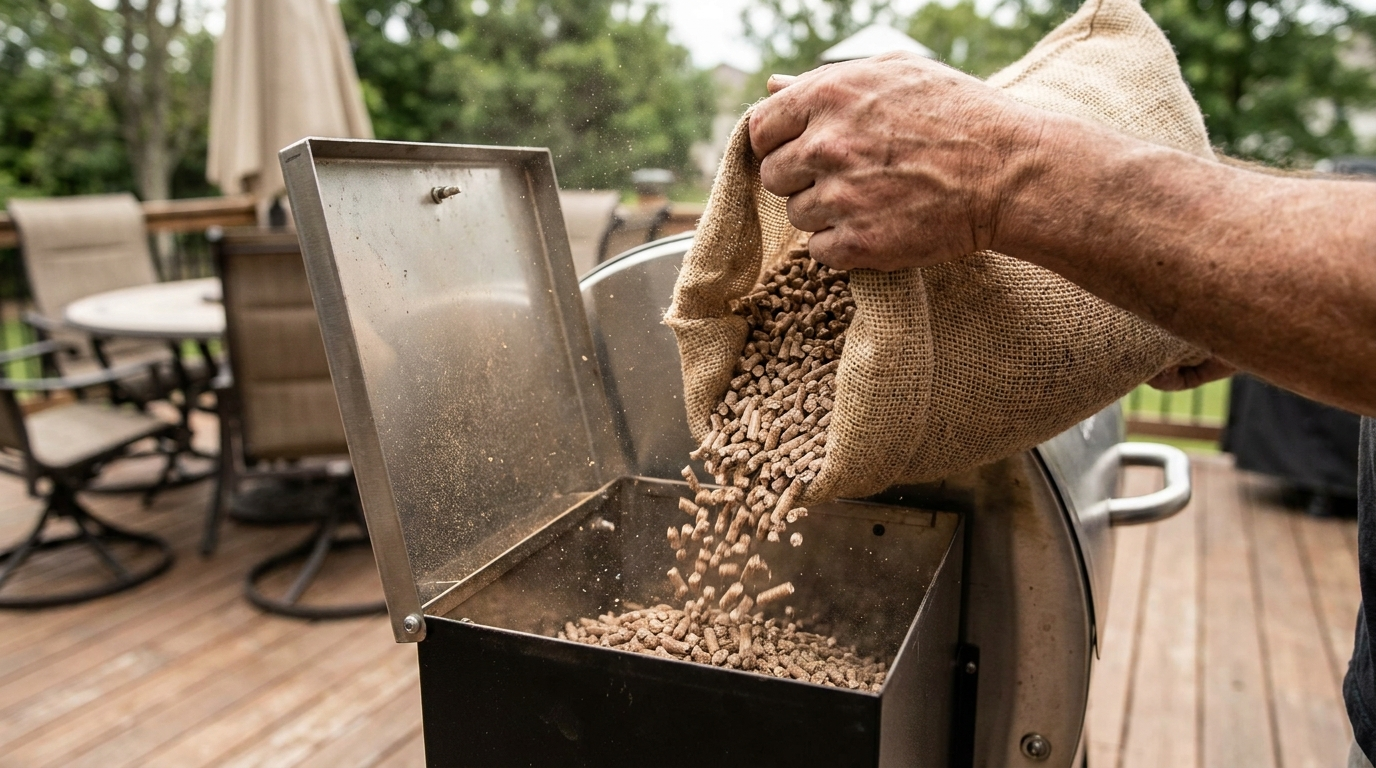
Pellet Smoker Pellets: How to Choose the Right Ones
Disclosure: This site may earn a commission from purchases made through links in this article.
Most people buying their first bag of pellet smoker pellets assume all wood pellets are basically the same. They’re not. The differences in smoke flavor, burn consistency, ash output, and moisture content are real enough to affect both your food and your equipment — and the industry has enough low-quality product floating around that it’s worth knowing what to look for before you spend money.
What’s Actually Inside a Bag of Pellets
This is where a lot of buyers get surprised. Not every bag labeled “hickory” or “apple” is 100% that species. Many budget pellets use a base wood — usually oak or alder — as filler, then add a percentage of the flavor wood listed on the bag. This isn’t inherently dishonest; oak burns cleanly and produces a neutral smoke that carries other flavors well. But it does mean you’re not always getting pure single-species smoke.
Some brands are upfront about blends. Others imply purity they don’t deliver. If you want true single-species pellets, look for brands that explicitly state 100% hardwood with no fillers, binders, or additives. A few manufacturers actually specify this on their packaging. Most don’t.
The other thing worth knowing: food-grade pellets are made from compressed sawdust using the wood’s natural lignin as a binder. No glue, no additives needed. If a pellet requires something extra to hold its shape, that’s a quality flag.
Wood Species and What They Actually Do
The flavor differences between species are real but easy to overstate. You’re not going to ruin a brisket by using hickory instead of post oak. That said, matching wood to meat still matters, especially on longer cooks where smoke accumulates.
Strong-Smoke Woods
- Hickory – The backbone of Southern BBQ. Assertive, savory, slightly nutty. Excellent on pork ribs, shoulders, and beef. Can overwhelm delicate proteins if you run it heavy for hours.
- Mesquite – The most aggressive option. Burns hot and fast, and the flavor builds quickly. Better suited to shorter cooks or blended with something milder. Texans use it on beef; use it sparingly on everything else.
- Oak – Often dismissed as a base wood, but post oak especially is genuinely great for beef. Medium smoke intensity, long burn, consistent heat. Central Texas pitmasters use it almost exclusively for a reason.
Mild-to-Medium Woods
- Cherry – Subtle, slightly sweet, and produces a beautiful mahogany color on poultry and pork. Works well blended with oak or hickory to add visual appeal without overpowering flavor.
- Apple – Mild and sweet. Good on chicken, pork tenderloin, fish, and vegetables. Long cooks at lower temps let it build without going bitter.
- Pecan – Sits between hickory and apple. Rich, slightly buttery, not aggressive. One of the most versatile options — handles brisket, ribs, and even poultry competently.
Specialty Woods
- Alder – Traditional Pacific Northwest choice for salmon. Light, clean smoke. Not widely used beyond fish and lighter proteins.
- Maple – Sweet and mild. Used on pork and poultry. Produces a nice bark color.
- Competition blends – Usually a mix of cherry, hickory, maple, and sometimes oak. Designed to be crowd-pleasing rather than bold. A reasonable default if you cook a variety of meats.
Pellet Quality: The Details That Matter
Moisture Content
This is the single biggest quality variable. Pellets absorb moisture from humidity and storage conditions. High-moisture pellets produce more steam than smoke, ignite poorly, create excess ash, and can jam your auger. They also swell, which causes feed problems in the fire pot.
Quality pellets are typically dried to a low moisture percentage. You can’t easily test this at home without a meter, but here are practical indicators: pellets should snap cleanly when bent, not bend or crumble. A clean snap indicates low moisture content. Dust at the bottom of the bag is a bad sign — it means the pellets are fragile and likely degrading.
Pellet Diameter and Length
Most pellets run around 6–9mm diameter. Size affects auger feed rate and burn characteristics. Mismatched pellet sizes in a bag can cause inconsistent feeding. This is more of a manufacturing consistency issue than a spec you’ll shop by, but it’s something to notice if you start getting temperature swings.
Ash Output
Lower-quality pellets — or pellets with bark and other debris included — produce significantly more ash. More ash means more frequent cleaning and higher risk of pot fires. Premium pellets made from debarked hardwood run cleaner. You’ll notice the difference after 10–15 hours of cook time when you pop open the fire pot.
Storage: Most People Get This Wrong
Pellets left in the hopper for weeks between cooks will absorb ambient moisture, especially in humid climates. Even in dry climates, temperature swings cause condensation. The result is swollen pellets, jammed augers, and the kind of erratic temperature behavior that gets blamed on the smoker itself.
Best practice:
– Empty the hopper after each cook if you won’t be cooking again within a few days.
– Store pellets in an airtight container — a sealed bucket or plastic bin with a gasket lid works well.
– Never leave an opened bag sitting on a garage floor; concrete wicks moisture.
– Don’t mix old and new pellets. Different moisture levels cause inconsistent burns.
This sounds like extra work, but a jammed auger mid-cook is a much bigger problem.
How Much Smoke Flavor You Actually Get
Here’s something worth understanding about pellet smoker pellets in general: they produce less smoke than offset stick-burners. That’s just physics. The fire pot burns at high efficiency; you’re getting mostly convection heat with a moderate smoke contribution.
This isn’t a flaw — it’s why pellet cookers are popular for beginners and convenience-focused cooks. But if you’re coming from stick-burning and expecting the same smoke ring and intensity, you need to manage expectations or use techniques to compensate.
To boost smoke output on a pellet smoker:
– Run lower temps (180–225°F) during the initial phase of a cook. More incomplete combustion = more smoke.
– Use a smoke tube filled with pellets and lit separately. This runs independently of the auger and adds considerable smoke without affecting the cook chamber temp.
– Some smokers have a “super smoke” or “smoke boost” mode that runs the auger intermittently to generate more smoke. This actually works.
Practical Buying Guidance
Buy in bulk, but not before you test. A single bag is usually worth buying first to check moisture, snap, ash output, and how your particular smoker runs on it. Once you find a brand that performs well in your machine, buying 20–40 lb bags cuts your cost per cook and means you always have supply.
Brand consistency matters more than brand prestige. The best pellet brand is one that delivers consistent quality batch to batch, not just the one with the most marketing behind it. If you notice a batch performing differently than usual — more ash, temperature swings, wet smell — trust that observation.
Match wood intensity to cook length. Short cooks at high heat (chicken thighs at 375°F for 45 minutes) tolerate aggressive woods like hickory because there’s less time for smoke to accumulate. Long low-and-slow cooks (12-hour brisket at 225°F) require a bit more care with heavy woods. Fruit woods shine on long cooks precisely because they’re subtle enough not to become acrid over time.
Blended pellets are underrated. A cherry-hickory blend on pork ribs — especially if you want color and flavor together — outperforms single-species hickory alone for most home cooks. Experiment with blends before chasing pure single-species performance.
The right pellet smoker pellets for your setup depend on what you’re cooking, how your smoker feeds and burns, and how you store between cooks. Get those variables dialed in and the wood species question almost becomes secondary.
Leave a Reply