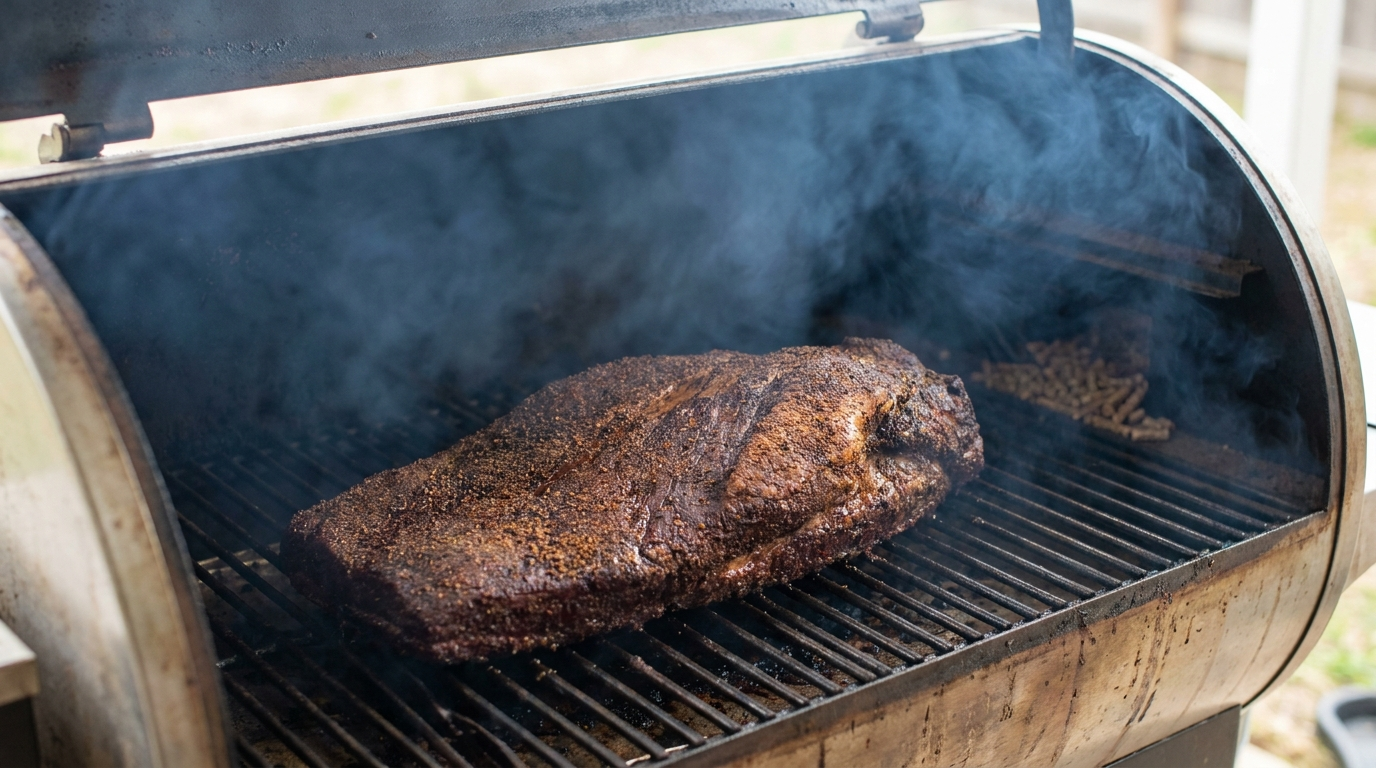
Pellet Meat Smoker Buyer’s Guide: What Actually Matters
Disclosure: Some links on this page may be affiliate links, meaning we earn a small commission if you buy through them, at no extra cost to you.
A pellet meat smoker sits in an interesting spot — it’s not quite a set-it-and-forget-it appliance, and it’s not the hands-on fire management of an offset. It’s something in between, and understanding that middle ground is exactly what makes or breaks a purchase decision.
I’ve run pellet smokers through everything from overnight briskets in January to competition-style pork ribs in July heat. What follows is what I actually wish someone had told me before I bought my first one.
The Real Trade-Off: Convenience vs. Smoke Intensity
This is the conversation nobody has clearly enough. Pellet smokers are genuinely convenient — you set a temperature, the auger feeds pellets, a fan maintains airflow, and the controller holds your target within a reasonable range. That’s real. But the smoke flavor you get is milder than a stick burner or a charcoal kamado. Not bad. Just different.
If you’ve eaten barbecue from a well-run offset and you’re chasing that same aggressive smoke ring and bark, a pellet smoker will get you close but not identical. The fire burns cleaner and hotter on average, which means less particulate smoke on the meat. Some people prefer it. Some people buy a pellet smoker and then add a smoke tube because they want more.
Know what you’re buying into before you buy.
Hopper Size: Why It Matters More on Long Cooks
Most pellet smokers ship with hoppers that hold somewhere between 15 and 20 pounds of pellets. That sounds like plenty until you’re doing a 14-hour brisket in 35-degree weather, where pellet consumption spikes because the auger is running near-constantly to maintain temperature.
Cold weather is the real stress test. In summer, a 18-pound hopper might comfortably get you through a long cook. In winter, same cook, same smoker, you might be refilling once. Check the hopper capacity and factor in your climate.
Some models have a hopper cleanout door at the bottom — a small feature that saves real time when you want to switch pellet flavors or store the unit. It sounds minor. After the third time scooping pellets out with a cup, you’ll disagree.
Temperature Control: The Gap Between Spec and Reality
Manufacturers advertise temperature variance figures, and some of those figures are accurate under ideal conditions. Real conditions are not ideal. Wind, ambient temperature, how full the hopper is, how recently you cleaned the fire pot — all of it affects temperature stability.
What you actually want to evaluate:
PID Controllers vs. Older 3-Position Controllers
Older or budget pellet smokers sometimes use simple 3-position controllers (Low/Medium/High) or basic non-PID digital controllers. They work, but temperature swings of 25 degrees or more are common. A PID (proportional-integral-derivative) controller constantly adjusts the auger speed in small increments to hold temperature more precisely. The difference shows up on long cooks where a 20-degree swing in a 4-hour cook matters less than in a 12-hour one.
Most mid-range and premium models have moved to PID. If you’re looking at a budget unit, check the controller type specifically.
Probe Ports and Included Probes
Every pellet smoker has a built-in temperature probe for the grate, but the quality varies. A warped or poorly placed probe reads inaccurate temps. Bring your own quality leave-in probe and verify against the controller display — you’ll often find a 10 to 20 degree discrepancy. That’s not a defect, it’s reality, and knowing your actual cook chamber temperature matters.
Cooking Area: Think in Square Inches, Not Racks
Manufacturers love to advertise multiple racks. Two racks sounds like a lot. But if the upper rack sits so close to the lid that you can’t fit a full packer brisket on it flat, that rack is essentially decorative for big cuts.
Measure the primary cooking grate. That’s your working area for anything over 4 inches tall. The upper rack is useful for ribs, chicken pieces, sausages — anything that doesn’t need height clearance. Plan your purchase around what you actually cook most, not the total advertised square inches.
Pellet Quality and Flavor: Not All Bags Are Equal
The pellets you burn directly affect flavor, temperature performance, and ash production. 100% hardwood pellets from a reputable brand burn cleaner and produce less ash than blended or lower-quality pellets that use filler wood or binders. More ash means more frequent cleanouts and a higher chance of fire pot clogging.
For flavor, the wood species makes a real but not dramatic difference. Hickory and mesquite are more assertive. Cherry and apple are milder and good for poultry. Pecan sits in the middle and pairs well with almost everything. The effect is subtler on a pellet smoker than a stick burner — don’t overthink it, but don’t buy cheap pellets thinking it doesn’t matter at all.
Store pellets in a sealed container. Pellets that absorb moisture crumble, jam the auger, and make a mess. A simple five-gallon bucket with a lid is enough.
Build Quality Markers Worth Checking
You can tell a lot from a few specific things:
- Lid fit and seal: A warped lid loses heat and smoke from day one. Press down on the lid at the store or check review photos carefully.
- Leg stability: Thin legs with cheap welds flex. You don’t want a smoker rocking when you’re pulling a 200-degree brisket off the grates.
- Grate material: Porcelain-coated grates are easier to clean. Cast iron grates retain and radiate more heat but require maintenance to prevent rust.
- Drip tray design: A flat, slide-out drip tray is far easier to clean than a built-in sloped system. Grease fires are a real hazard if the tray isn’t maintained — this is where most pellet smoker fires start.
Wi-Fi and App Control: Useful, Not Essential
A lot of pellet smokers now include Wi-Fi connectivity and app control. The ability to monitor grate temperature and internal meat temp from your phone is genuinely useful for long overnight cooks. You can check progress without going outside at 2 a.m.
But app quality varies wildly. Some are stable and well-designed. Others crash, disconnect, or lag in ways that make them more frustrating than useful. If app connectivity is a priority, check user reviews specifically about the app — not just the smoker overall.
Adjusting temperature remotely is convenient. Relying entirely on an app to manage a fire is not something I’d recommend as a primary workflow. Treat it as a monitor with bonus features.
Sizing It Right for Your Household
A compact pellet meat smoker — roughly 450 to 500 square inches of primary cooking area — handles most backyard needs: a full brisket, two racks of ribs, a whole chicken. Unless you’re regularly cooking for large groups or doing competition volume, you probably don’t need the largest unit on the market.
Larger smokers use more pellets and take longer to come to temperature. They also cost more to run. Buy for how you actually cook 80% of the time, not your theoretical peak use case.
One Thing Most Buyers Skip: Burn-In and Break-In
Before your first actual cook on any new pellet meat smoker, run a burn-in cycle. Load the hopper, let the smoker run at a high temperature (around 350–400°F) for 30 to 45 minutes with nothing on the grates. This burns off manufacturing residue, oils, and coatings. Skip it and that flavor ends up on your first brisket.
Also learn where your smoker runs hot. Every unit has hot spots — usually near the fire pot or near the back wall. Know them, and rotate meat accordingly on longer cooks.
The best pellet smoker for you is the one you actually understand how to use. Spend the first few cooks paying attention rather than just trusting the controller, and you’ll get dramatically better results from whatever unit you buy.
Leave a Reply