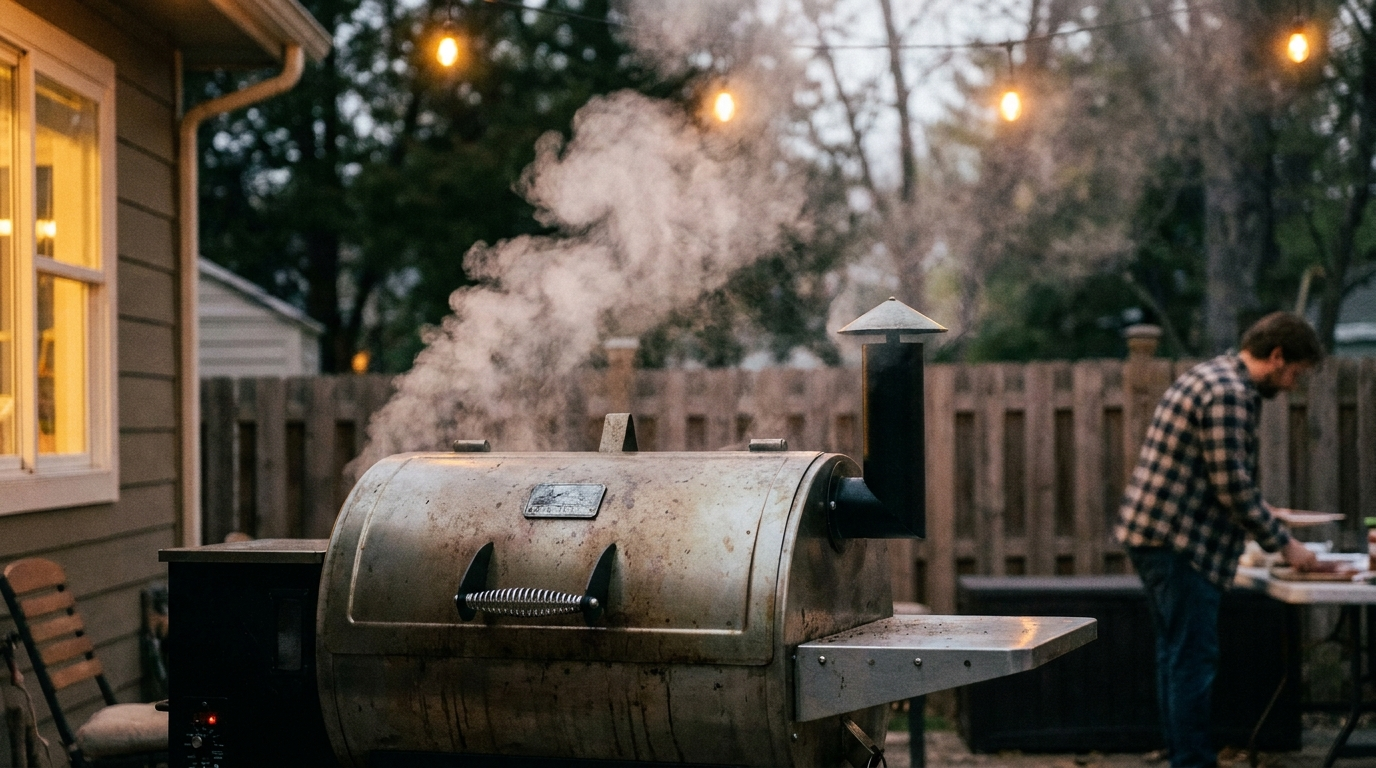
Pit Boss Pellet Grill and Smoker: Honest Buyer’s Guide
Disclosure: This page contains affiliate links — we may earn a small commission if you buy through them, at no extra cost to you.
The pit boss pellet grill and smoker lineup is one of the most crowded product families in backyard cooking. That’s both a strength and a problem. Lots of options means you can find something close to what you actually need. It also means you can easily buy the wrong thing if you don’t know what separates one model from the next. Here’s what you should know before pulling the trigger.
What Pit Boss Actually Does Well
First, the honest case for the brand.
Pit Boss competes almost entirely on value. Their grills are built heavier than you’d expect for the price — thicker steel, larger cooking surfaces, and flame broiler access (more on that shortly) are table stakes even on mid-range units. Compared to competitors in the same price bracket, you typically get more grill for your money.
The flame broiler is worth calling out specifically. It’s a sliding plate underneath the cooking grates that lets you expose food directly to the fire pot flame. That means real sear marks and higher direct heat without buying a separate grill. It’s a genuinely useful feature, not a gimmick. If you’ve ever been frustrated that pellet grills struggle to sear a steak properly, this solves most of that problem.
Pellet consumption is reasonable across most models, and Pit Boss’s own brand pellets are widely available and competitively priced. You’re not locked into a proprietary fuel source.
Where Pit Boss Falls Short
No sugarcoating here.
Temperature consistency is hit or miss — particularly on the budget end of the lineup. The cheaper digital controllers can swing 25–40°F above or below your set temp, especially in cold weather or wind. That’s usually fine for low-and-slow smoking, but it matters a lot if you’re trying to bake bread or hold a precise 165°F for chicken thighs.
The PID controllers found on higher-end models (look for “PID” explicitly in the specs) are a different animal. They hold temperature far more tightly. If precise temp control matters to you, filter your search to PID-equipped units and don’t compromise.
Build quality has been inconsistent over the years. Some owners report legs bending under load on the larger, heavier units, particularly during assembly or if the grill is moved frequently. Welds and paint quality have drawn complaints on certain production runs. This isn’t universal — plenty of owners run these grills hard for years without issues — but it’s worth reading recent reviews on a specific model before buying, not just the brand in general.
Customer support has a mixed reputation. Parts availability has improved, but getting a timely response for warranty claims has frustrated some owners. That’s relevant because the grill controller, igniter rod, and auger motor are the components most likely to need attention over time on any pellet grill.
Understanding the Model Lineup
Pit Boss releases new models constantly and retires old ones, so specific model names shift. What stays consistent are the tiers.
Entry-Level (Tailgater, 340, 440 range)
Smaller cooking area, basic digital controller (not PID), lighter construction. Good for someone who wants to experiment with smoking without a major investment. Expect temperature swings. The Tailgater is genuinely portable and worth a look if you cook at campsites or tailgates — that’s a specific use case it handles well.
Mid-Range (700–850 series)
This is the sweet spot for most buyers. You get a cooking surface large enough for full briskets and multiple racks of ribs simultaneously, solid steel construction, and on many units, the upgraded controller. The 820 and similar sizes feed a family of four to six easily and store under a standard deck cover.
Pro and Platinum Series
Double-walled construction on some models, Wi-Fi connectivity, PID control, and significantly heavier build. The Wi-Fi app has had reliability complaints — I wouldn’t buy these models for the app, but the underlying grill hardware is genuinely better. If you’re cooking in cold climates, the insulation difference is real and worth paying for.
Vertical Smokers
The pit boss pellet grill and smoker lineup includes several dedicated vertical cabinet smokers. These are excellent for ribs, whole birds, and sausage where you want maximum smoke exposure and you’re not looking for searing capability. They run cooler more naturally and maintain smoke density better than horizontal units. If you rarely grill and mostly smoke, a vertical deserves serious consideration over a horizontal combo unit.
Practical Things to Know Before You Buy
Assembly
Count on two to three hours, ideally with a second person for the larger models. The instructions are functional but not great. Watch a YouTube assembly video for your specific model beforehand — it’ll save you backtracking.
Seasoning the Grill
Do it before cooking food. Run the grill at high heat (around 350°F or higher) for 45–60 minutes before first use. This burns off manufacturing oils and seals the steel. Skip this step and your first cook will taste like a factory floor.
P-Setting
Many Pit Boss grills have a “P-setting” dial on the controller. This controls the pause between auger cycles, which affects how much smoke is produced and how stable the temperature runs. Higher P-settings = more smoke, cooler temp, more temperature variance. Lower = less smoke, hotter, more stable. There’s no universal right answer — you tune it for your weather and your cook. Learn this early and you’ll get dramatically better results.
Pellet Quality Matters More Than You Think
Pit Boss brand pellets are fine. Competition blends from other brands can add noticeable flavor complexity, especially for long cooks. Avoid cheap pellets with a lot of filler — they produce more ash, clog the fire pot faster, and mute flavor. When you notice excessive ash buildup, check your pellet brand before assuming something is wrong with the grill.
Cold Weather Performance
Below 40°F, most pellet grills struggle to hit and hold high temps without a grill blanket. Pit Boss sells insulated blankets for their models, and they’re worth it if you live somewhere with real winters. Without one, you’ll burn through significantly more pellets trying to compensate.
Who Should Buy a Pit Boss Pellet Grill and Smoker
Buy it if you want a capable, set-it-and-forget-it smoker without spending top-tier money. The learning curve is gentle compared to offset or charcoal smokers. You’ll produce genuinely good brisket, ribs, and pulled pork well before you’ve mastered the nuances of the grill.
Skip it if your priority is competition-level temperature precision or you want a grill that requires zero tinkering. In that case, you’re looking at a higher price bracket regardless of brand.
One specific recommendation: if you’re buying the pit boss pellet grill and smoker to replace a gas grill and you also want to keep searing capability, go for a model with the flame broiler and at least the mid-level controller. That combination handles the widest range of cooks without compromise.
Before You Finalize Your Decision
Check the current firmware version for the controller model you’re considering — Pit Boss has pushed updates that resolved temperature control issues on several units, but only if your controller can receive them. Check whether the specific unit you’re buying ships with an updatable controller or the older fixed version. Retailers don’t always make this obvious, and it’s worth a quick message to customer service before purchasing.
Register the grill immediately after assembly. Warranty claims require registration, and more than a few owners have lost coverage because they waited and couldn’t prove the purchase date. Takes two minutes and matters a lot if the igniter dies six months in.
Leave a Reply