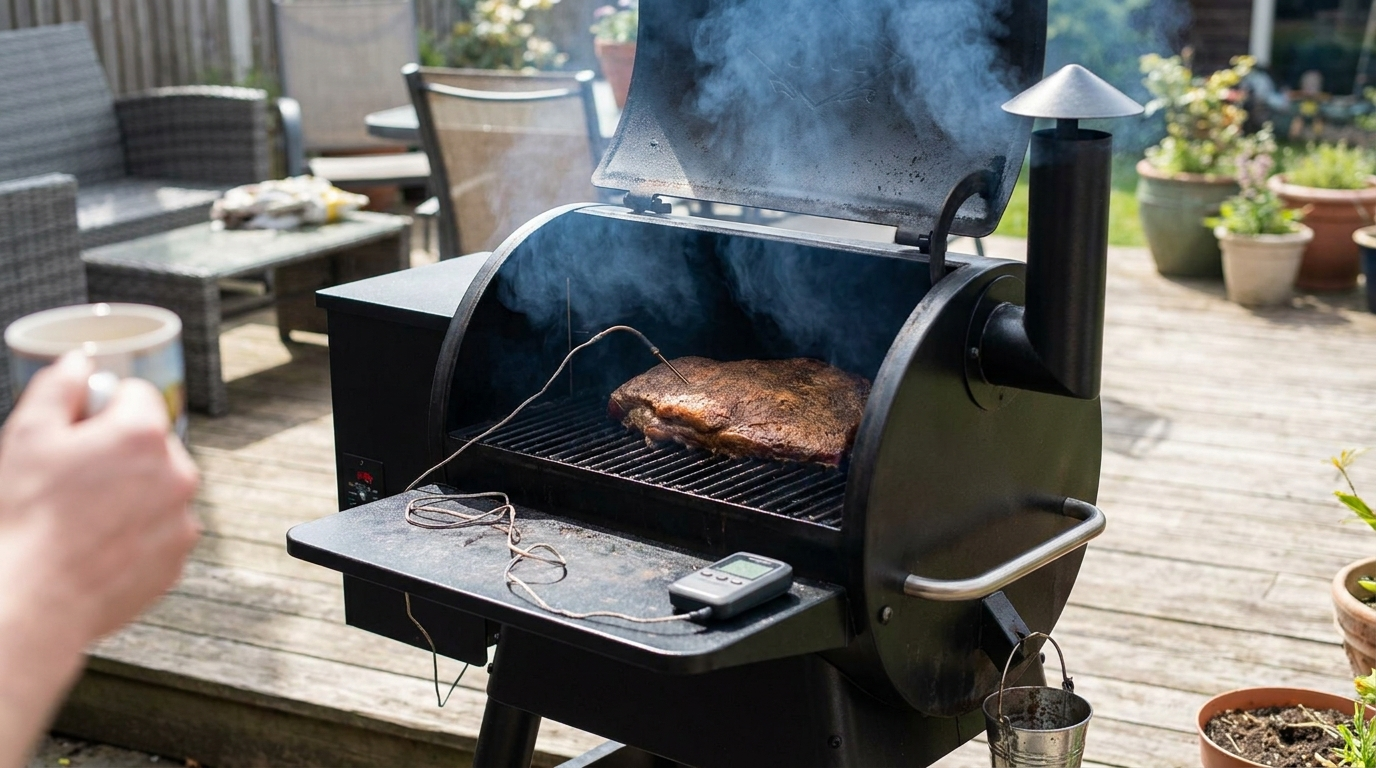
Pit Boss Pellet Smoker: What You Should Know Before You Buy
Disclosure: This site may earn a small commission if you purchase through links in this article, at no extra cost to you.
The pit boss pellet smoker has carved out a serious reputation in the mid-range pellet grill market — and for good reason. But “good reputation” doesn’t mean it’s the right grill for every backyard. There are real compromises here, a few quirks that don’t show up in spec sheets, and some models that outperform others by a wide margin. Let’s get into it.
What Pit Boss Actually Gets Right
Let’s start with the honest positives, because there are several.
Price-to-Cooking-Area Ratio
Pit Boss consistently offers more cooking surface per dollar than most competitors at the same price point. Their larger barrel-style grills, like those in the 1000-series range, give you enough grate space to run a full packer brisket, a rack of ribs, and a chicken simultaneously without playing Tetris. For backyard cooks feeding a crowd, that matters more than people realize until they’re cramming food onto a smaller grill.
The Flame Broiler
This is a legitimate differentiator. Most pellet grills are primarily indirect cookers — great for low-and-slow, but they struggle with true searing. Pit Boss addressed this with a sliding plate underneath the main grates that exposes your food to direct flame. Pull that lever, let the grates heat up, and you can get a proper sear on a steak. It’s not a perfect system — the heat distribution across the zone can be uneven — but it’s genuinely useful and not something you get on comparable Traeger or Camp Chef entry-level models.
Build Quality at the Price Point
For what you’re paying, the steel construction is solid. Not Weber Summit solid, but not flimsy either. The porcelain-coated grates hold up well to regular use, and the hopper capacity on most mid-size units means you’re not babysitting the fuel supply every two hours during a long cook.
The Real Trade-offs (Nobody Talks About These Enough)
Temperature Consistency Is the Biggest Variable
Here’s the thing about pellet grills generally — they maintain temperature through a feed auger and fan system, not pure combustion. Pit Boss units can swing ±15-25°F around your set point, especially in colder weather or windy conditions. That’s manageable for most cooking. But if you’re cooking something temp-sensitive, like poultry skin you want to render properly or a delicate fish, you’ll feel those swings.
Some of their higher-end models with PID controllers handle this better. If consistent temperature is a priority, look specifically for Pit Boss units advertising PID control — it’s not universal across the lineup.
The App and Wi-Fi Experience
Pit Boss has been building Wi-Fi and Bluetooth connectivity into more models. The honest assessment: the connectivity features work, but they’re not as polished as the competition. The app has improved over time, but notifications can be unreliable, and the UI isn’t as intuitive as it could be. You’ll get the core functionality — remote temp monitoring, auger control — but don’t buy a Pit Boss expecting a seamless smart-home experience.
Smoke Output at Higher Temps
At smoking temperatures (225°F–250°F), Pit Boss grills produce solid smoke flavor. Crank it above 300°F and the smoke production drops off significantly — that’s true of most pellet grills, but worth knowing if you want smoke flavor while roasting a chicken at higher heat. The workaround is to use the “P setting” on models that have it, which adjusts the pellet feed cycle and increases smoke output. It’s a useful feature but adds a learning curve.
Which Model Should You Actually Look At?
Pit Boss makes a confusing number of SKUs across different retailers. Here’s how to think about it without getting lost.
For Smaller Households or Deck Cooking
The tabletop and vertical smoker options are surprisingly capable. The vertical cabinet-style smokers in particular are excellent for ribs, sausage, and fish — the multi-rack layout lets you do volume without a massive footprint. If you’ve got limited space or you’re primarily doing lower-temp smoking rather than grilling, a vertical pit boss pellet smoker deserves a serious look.
For Most Backyard Cooks
The 700-series and 1000-series horizontal grills hit the sweet spot. You get the flame broiler, enough cooking space for practical use, and a hopper size that won’t have you refilling mid-cook on a 12-hour brisket. These are the units with the longest track record and the most community knowledge behind them — which matters when you need to troubleshoot.
For Serious Volume Cooking
Pit Boss makes competition-style and larger units that can handle substantial loads. The trade-off is size, weight, and a higher price that starts competing with brands like Camp Chef and Recteq that have stronger reputations for fit-and-finish at the upper end. At that price range, compare carefully before committing.
Pellet Quality Matters More Than People Think
This isn’t a knock on Pit Boss specifically — it applies to any pellet grill — but cheap or damp pellets will hurt your cook and can jam the auger. Pit Boss sells their own branded pellets, and they’re decent. Competition or flavored blends from other brands work fine too. What you want to avoid is bulk pellets stored in damp conditions; they swell, break apart, and cause feed problems that people often blame on the grill itself.
Store your pellets in a sealed container or a dedicated pellet storage bin if you live somewhere humid. Keep the hopper empty if the grill is sitting unused for more than a week or two.
Startup and Shutdown: Do This Every Time
New Pit Boss owners sometimes run into issues that come from skipping the basic startup protocol. Always:
- Prime the auger on first use. There’s air in the system. The grill needs time to push pellets to the fire pot before it’ll light properly.
- Use the proper shutdown cycle. Don’t just cut power. Let the fan run through the cool-down cycle to prevent burn-back into the auger — it can damage the machine and is completely avoidable.
- Clean the fire pot regularly. Ash buildup is the most common reason for temperature problems and failed ignitions. Vacuum it out every 3-5 cooks depending on how much you’re running it.
These aren’t complicated. But skip them and you’ll think you have a defective unit when you just need basic maintenance.
How It Stacks Up Against the Competition
At similar price points, the main alternatives are Traeger, Camp Chef, and Recteq. Traeger has better brand polish and wider service networks. Camp Chef tends to win on precise temperature control and modular accessories. Recteq (formerly Rec Tec) has an extremely loyal following built on build quality and customer service.
A pit boss pellet smoker beats most of these on raw cooking real estate per dollar. If you want the biggest grill for your budget and you’re willing to learn its quirks, Pit Boss wins that comparison. If you want the smoothest experience out of the box or the best app integration, Camp Chef or Traeger have the edge.
A Few Things Worth Checking Before You Pull the Trigger
- Confirm whether the specific model has a PID controller — it makes a real difference in temperature consistency.
- Check the warranty terms. Pit Boss offers warranties on their units, but coverage can vary by retailer, so verify what you’re actually getting.
- Look for open-box or floor model deals. Pit Boss grills sell through big-box retailers, and floor models are often discounted significantly — just inspect the igniter and fire pot carefully before buying used or open-box.
- Join a Pit Boss Facebook group or forum before and after you buy. The community knowledge is extensive, and most quirks you’ll encounter have already been solved by someone else.
The pit boss pellet smoker isn’t a perfect machine, and it doesn’t need to be to earn a place in your backyard. Know what you’re buying, set it up right, and it’ll produce serious food for years.
Leave a Reply