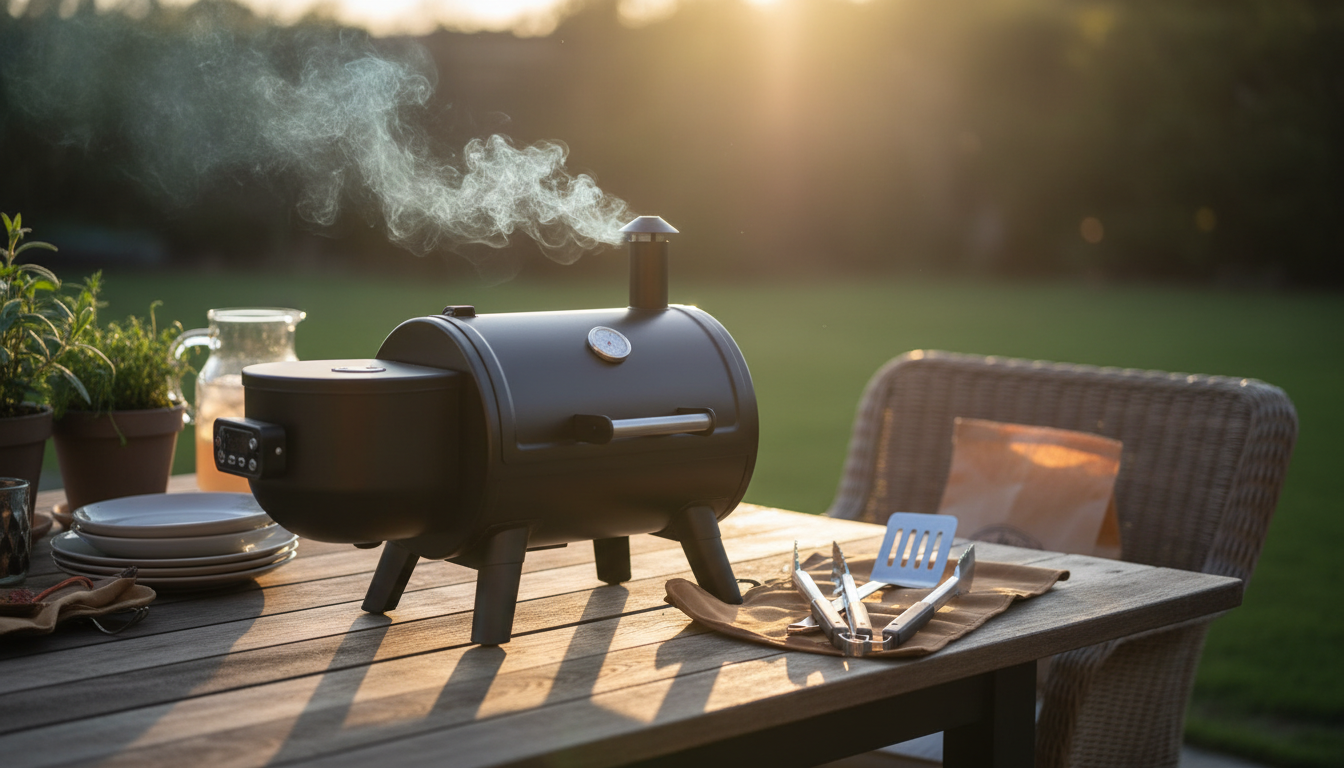
Portable Pellet Smoker: How They Work and What to Expect
Disclosure: Some links on this site may be affiliate links, meaning we may earn a small commission at no extra cost to you.
A portable pellet smoker sounds like a contradiction. Pellet grills are known for being bulky, power-hungry machines with auger systems and digital controllers — not exactly tailgate gear. But the category has genuinely matured over the last few years, and there are now compact units that work well enough to be worth taking seriously. The question is whether they actually fit your situation, and what you’re giving up compared to a full-size rig.
Let me cut through the noise on this.
What Actually Makes a Pellet Smoker “Portable”
The word portable gets applied loosely. Some manufacturers slap it on anything with folding legs. For practical purposes, a portable pellet smoker should be:
- Light enough for one person to carry (typically under 30 lbs)
- Compact enough to fit in a truck bed, car trunk, or cargo area without tetris-level packing
- Able to run off a standard outlet or, in some cases, a battery or power station
That last point matters more than people realize. Pellet smokers need electricity to run the auger, igniter, and fan. Unlike a charcoal kettle or a gas grill, you can’t just pack it and go anywhere. You need a power source. Most portable units draw somewhere in the range of 300–400 watts once running (ignition spikes higher), which means a reasonably sized portable power station can run them for several hours.
If you’re camping without hookups, factor that in. It’s solvable — but it’s not the same as throwing a bag of charcoal in the back of the truck.
How the Mechanics Differ from Full-Size Units
The core system is the same: pellets feed from a hopper into a firepot via an auger, a hot rod ignites them, and a fan circulates the heat and smoke. A controller regulates the auger speed to hold temperature.
But smaller units make tradeoffs:
Hopper capacity is limited. You might get 5–10 lbs of pellets in a portable unit versus 18–20 lbs on a large home smoker. That’s enough for a long cook, but you’ll need to watch it more closely. Running out of pellets mid-cook causes a fire-out situation, and restarting a pellet grill from cold mid-cook is annoying.
Temperature swings are more pronounced. Smaller fireboxes and lighter construction means less thermal mass. Wind hits them harder. If you’re cooking in cold weather or on a breezy day, expect the controller to work harder and the temps to fluctuate more than they would on a heavier unit.
Smoke production is lighter. This is the main complaint people have. Portable pellet smokers, especially at higher temps, tend to produce thin smoke. That clean, efficient combustion that makes pellet grills easy to use also makes them milder-tasting than offset smokers or kamado grills. Some units have a dedicated smoke mode that drops temps to increase smoke output — worth using if your unit has it.
What Cooks Actually Work Well
Not every cook makes sense on a small portable pellet smoker. Here’s what plays to their strengths:
Chicken and Poultry
Chicken thighs, spatchcocked birds, turkey breasts — these cook relatively quickly, don’t need a huge grate, and benefit from the steady indirect heat that pellet grills do well. Skin won’t get as crispy as it would over direct flame, but the meat stays juicy and picks up enough smoke flavor.
Ribs
A full rack of baby backs or spare ribs fits on most portable units, though you might need to curl them or use a rib rack. Low-and-slow at 225–250°F works fine. The 3-2-1 method translates perfectly. Just watch your hopper level going into the foil stage.
Brisket Flat
A whole packer brisket won’t fit. A trimmed flat will, and it’s genuinely good off a small pellet smoker. Takes the same time, same technique. If you’re traveling and want to do a brisket at a cabin or campground with power, this is very doable.
Burgers, Sausages, Fish
Fast cooks where you want a hint of smoke without a long commitment. The grids on most portable pellet smokers aren’t designed for high-heat searing — if that’s your priority, you’ll want a unit with a sear mode or direct flame access.
The Power Station Question
This comes up constantly, and it’s worth addressing directly. Running a portable pellet smoker off a battery-powered station is practical if you choose the right station. The ignition phase is the power draw spike — it can hit 300+ watts for a few minutes. Once the fire is established and the unit is holding temp, the draw drops significantly.
For a 4–6 hour cook, a mid-size power station (500–1000Wh capacity) will generally get the job done, though your mileage depends on temperature settings, ambient conditions, and the efficiency of your specific unit. Check the wattage rating on your smoker before assuming any station will work.
This setup opens up camping, tailgating, and off-grid cooking in a real way. It’s not as carefree as lighting charcoal, but it works.
What Separates a Good Unit from a Frustrating One
Having used several of these, the differences that matter most in real use:
Controller quality. A PID controller holds temperature tightly and recovers quickly from the door being opened or a cold wind. Cheaper units use simpler controllers that cycle more loosely. You can often tell by how close the actual grate temp stays to the set point over a two-hour cook.
Build quality on the firepot and heat deflector. Thin metal warps. A warped heat deflector causes hot spots and uneven cooks. It also affects longevity — some cheaper portable units show significant warping after a season of use.
Auger design. A jammed auger shuts down your cook. Units with better auger geometry and a quality motor handle bridging (where pellets clump and block the feed) more reliably. Reading user feedback specifically about auger jams and fire-outs is useful here.
Ash management. Small units accumulate ash fast. A unit with a cleanout system or easy-access firepot makes the maintenance between cooks less annoying — and neglecting ash buildup is one of the most common causes of ignition failures.
Lid seal and insulation. Thin-walled units with loose lid seals bleed heat. In cold weather or wind, this matters a lot. Some portable models have done a surprisingly good job with insulation relative to their size.
Real Limitations Worth Knowing
A portable pellet smoker is a genuine tool, but it’s not a replacement for a full-size offset or a large pellet grill if that’s what your cooking actually requires. The smoke flavor profile is milder. The capacity is smaller. You’re dependent on power. And in truly cold or windy conditions, maintaining stable temps requires more attention.
For the right use case — camping with hookups, tailgating, apartment patios, taking serious BBQ to a potluck — they’re excellent. For someone who regularly cooks whole briskets or large pork shoulders for groups, a portable unit is a supplement, not a primary smoker.
Getting the Most Out of Yours
A few things that make a consistent difference:
- Use quality pellets. Low-quality or old, moisture-exposed pellets cause inconsistent burns and more ash. Store them in an airtight container.
- Do a burn-in before your first food cook. Run it empty at a high temp to burn off any manufacturing residue.
- Preheat properly. Let it come to full temp and stabilize before loading food. On smaller units, the temperature stabilization after a cold start takes longer than people expect.
- Keep a wireless meat thermometer in the rotation. Don’t rely solely on the built-in probe if the unit has one — grate-level temps and food temps tell different stories.
- Clean the firepot after every 2–3 cooks. Ash accumulation is the number one cause of ignition failures and temperature problems on smaller units.
The portable pellet smoker category has gotten genuinely good. The best units deliver real smoked food with minimal babysitting in a package you can actually take places. Know what they do well, plan for the power requirement, and they’ll earn their spot in the rotation.
Leave a Reply