Disclosure: This page contains affiliate links; we may earn a commission on purchases at no extra cost to you.
The Small Gas Grill Is Underestimated
A small gas grill gets dismissed more than it deserves. People assume that anything under two feet of grate space is a compromise — good for one person, maybe two, but not serious cooking. That assumption is wrong, and it comes from not understanding how grilling actually works.
I’ve cooked full dinners for six on a two-burner portable unit. I’ve also burned chicken thighs on a massive six-burner setup because I didn’t know how to manage heat zones. Size matters less than technique, and a compact grill forces you to learn technique fast.
This article is about what a small gas grill actually is, what it does well, where it genuinely struggles, and how to get real results out of one.
What “Small” Actually Means in Gas Grills
The industry doesn’t have a clean definition. In general terms:
- Small: Under 300 square inches of primary cooking space
- Medium: 300–450 square inches
- Large: 450+ square inches
Three hundred square inches sounds abstract. In practice, it’s roughly the footprint of a large pizza box. That fits about 12 burgers, a whole spatchcocked chicken, or a rack of ribs laid diagonally. Not enormous. Not cramped either.
Compact gas grills come in a few distinct forms:
Tabletop Models
Sit on a picnic table, deck rail, or tailgate setup. Usually one or two burners, around 150–280 square inches. Run on 1-pound camping canisters or adapt to a standard 20-pound propane tank with an aftermarket hose.
Freestanding Compact Carts
Look like a regular gas grill but scaled down. Two burners, legs with wheels, a side shelf. Usually 250–350 square inches. This is the sweet spot for a small apartment balcony or a household that doesn’t grill in bulk.
Portable Folding Units
Fold flat for transport. Legs swing down when deployed. Popular with campers and tailgaters. Cooking area is usually modest — 150–200 square inches — but they’re genuinely packable.
Heat Management on a Two-Burner Grill
This is where most people get into trouble. With only two burners, you have fewer options for creating temperature zones — but it’s still absolutely doable.
The basic move: run one burner on high, the other on low or off. That gives you a searing side and an indirect side. You sear a pork chop on the hot side for a couple of minutes per face, then move it to the cooler side and close the lid to finish cooking through without burning the exterior. Same approach works for thick chicken breasts, bone-in thighs, sausages.
On a small gas grill, the indirect zone is smaller. A whole chicken needs to sit over the off burner with the lid closed, and the active burner on the other side provides ambient heat. It works. It just requires a bit more attention to rotation if the grill has any hot spots, which most do.
Lid management matters more on a compact grill. The smaller interior heats up faster and loses heat faster. Keep the lid closed as much as possible when doing indirect cooking. Every time you lift it, you’re venting heat you can’t easily recover.
What a Small Gas Grill Does Genuinely Well
Weeknight proteins. Steaks, burgers, fish fillets, chicken thighs — anything that cooks in under 15 minutes is perfectly suited. Two burners is plenty.
Vegetables. Asparagus, zucchini, corn, peppers, mushrooms. Spread them over the grate and you’ll work through a serious quantity in a few batches.
Portability. A compact tabletop gas grill goes to the campsite, the beach parking lot, the back of a truck. You can grill somewhere without an infrastructure, which a full-size cart grill cannot offer.
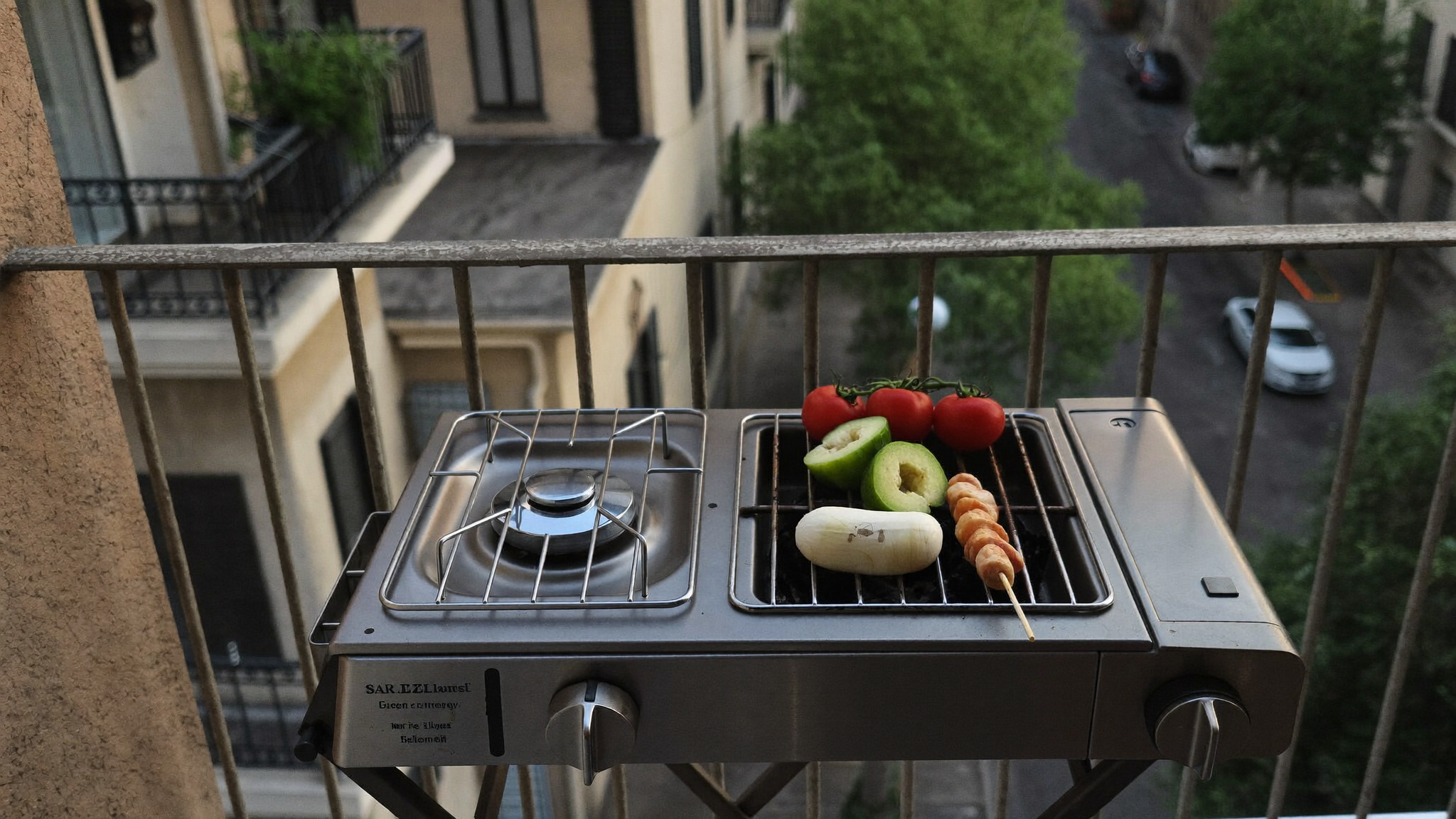
Balcony and small-space cooking. Many apartment buildings prohibit charcoal grills on balconies due to fire codes but allow gas. A compact two-burner freestanding unit can fit on a surprisingly small balcony while still giving you a real cooking experience.
Preheating speed. Smaller grates reach cooking temperature in 8–10 minutes. On a large six-burner grill, getting the full surface evenly hot takes longer.
Where It Struggles
Be honest with yourself before assuming a small gas grill is enough.
Cooking for crowds. If you’re regularly feeding eight or more people at once, you’ll be running multiple batches and managing timing across those batches. That’s doable but genuinely more work.
Large roasts and brisket-style indirect cooks. A whole brisket or a large pork shoulder needs room to sit comfortably over an indirect zone with adequate airspace. On a compact grill, you’re working against physics. The heat source is too close, and the cooking chamber is too small to maintain the gentle, even ambient heat that long cooks need. A small gas grill is not the right tool for that job.
Smoking. You can add wood chips in a foil packet to any gas grill, but the smoke dissipates quickly on smaller units with tighter clearances and less thermal mass. You’ll get some smoke flavor. You won’t get deep bark.
Side burners. Most compact models don’t have one. If you rely on a side burner for sauces or cast iron searing, you’ll need to plan around that absence.
Things Worth Paying Attention to in a Compact Gas Grill
This isn’t about ranking products. It’s about knowing what features actually matter versus what’s marketing.
Grate Material
Stainless steel grates are durable and resistant to rust but require more oil to prevent sticking. Cast iron grates hold heat better and give stronger sear marks, but they need more maintenance to prevent corrosion. Porcelain-coated cast iron is a reasonable middle ground on a compact unit.
BTU Output — and Why It’s Often Misleading
Manufacturers list BTU output as a headline number. Higher isn’t automatically better. A smaller cooking surface with lower total BTUs can produce higher temperatures than a larger surface with more BTUs, because the heat is more concentrated. What matters is BTUs per square inch, not total output.
Build Quality at the Burner
Burners on budget compact grills are often thin metal that corrodes quickly, especially at the coast or in humid climates. Look at how the burner tubes are positioned and whether the igniter has a backup piezo option. Electronic ignition fails over time; a manual ignition option is useful insurance.
Lid Fit and Seal
A lid that doesn’t seat tightly bleeds heat constantly. On a large grill this is a nuisance. On a small gas grill running indirect heat, a poor lid fit actively undermines cooking. Check hinge quality and whether the lid feels solid when closed.
Propane Connection
1-pound camping cylinders are convenient but expensive per BTU and produce inconsistent pressure as they deplete. A unit that accepts a standard 20-pound tank via a regulator hose is significantly cheaper to operate and more reliable during a cook. Many tabletop models offer this as an option.
Maintenance That Actually Extends Life
Compact grills sit outdoors and take weather like any other grill, but their smaller parts — especially burner tubes — can clog or corrode faster. A few habits make a real difference.
Brush the grates while they’re still warm after each cook. Residue burns off more easily when the metal is hot. Once it cools and hardens, it bonds.
Check the burner tubes for spider nests at the start of each season. Spiders are drawn to propane residue and will build webs in the burner tubes over winter. This partially blocks gas flow and causes uneven flames or, in worse cases, a flashback.
Cover it. A fitted cover keeps moisture and debris off the igniter, burner tubes, and grate. It’s one of the simplest ways to extend the working life of any outdoor gas appliance.
Disconnect the propane tank when the grill isn’t in use for extended periods. It’s a basic safety habit, and it also prevents slow gas leaks at the regulator.
Closing Thought
A small gas grill isn’t a beginner’s tool you graduate out of. It’s a specific piece of equipment with a defined purpose, and that purpose covers a lot of ground — weeknight dinners, camping trips, balcony cooking, cooking for two. The limitation isn’t the grill. It’s using it for tasks it wasn’t designed for and then blaming the size.
Leave a Reply