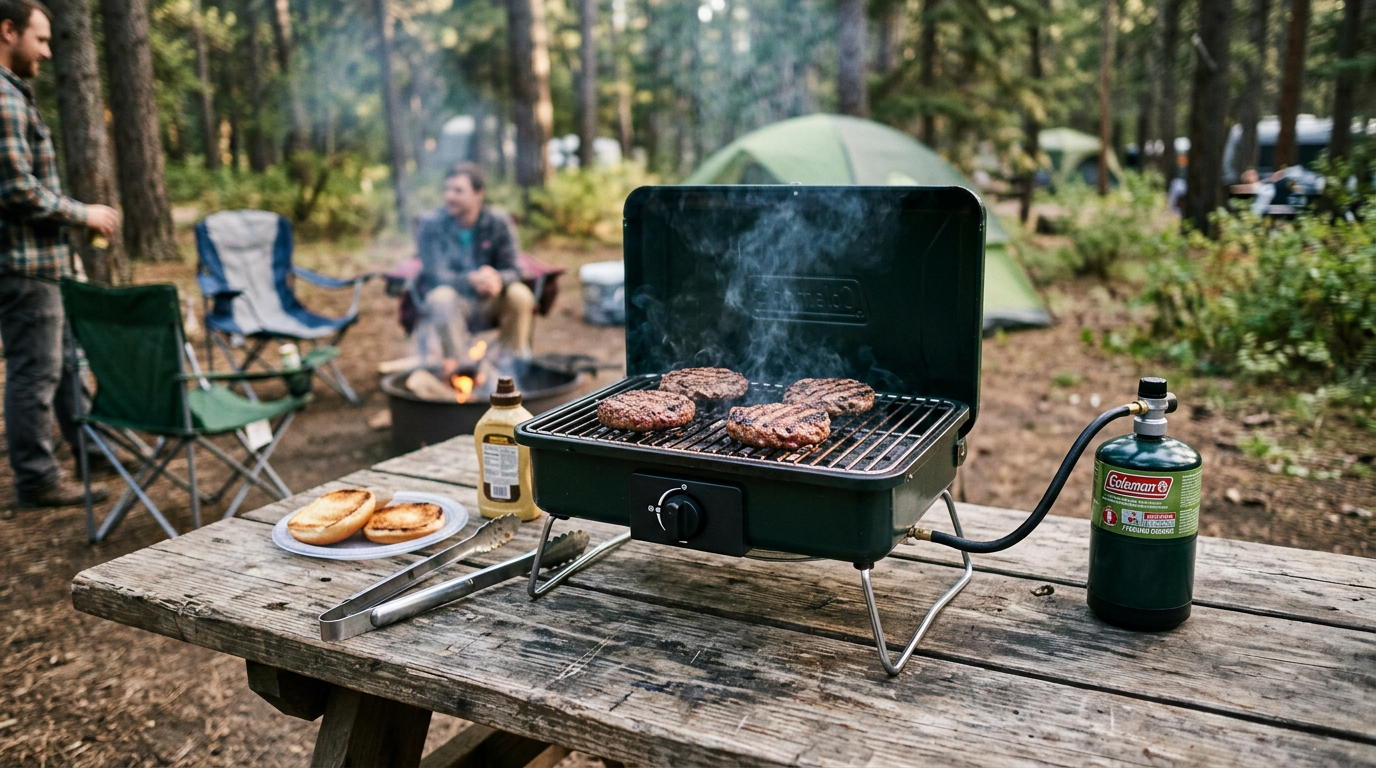
Portable Propane Grills: How They Work and What to Expect
Disclosure: Some links on this site may be affiliate links, which means we may earn a small commission if you make a purchase — at no extra cost to you.
A portable propane grill sounds simple enough — small grill, small tank, go anywhere. But there’s a real gap between what people expect and what they actually get the first time they fire one up at a campsite or tailgate. Grates that heat unevenly, flimsy legs, a wind that kills the flame mid-cook — these aren’t rare complaints. They’re almost universal with the wrong setup.
This article covers how these grills actually work, what separates a frustrating one from a genuinely useful one, and how to cook well on them even when conditions aren’t ideal.
How a Portable Propane Grill Actually Works
The basics are straightforward. Propane from a small 1-lb canister (or a standard 20-lb tank with an adapter hose) feeds through a regulator, which drops the pressure to a level the burner can handle safely. The burner — usually one or two stainless steel or cast-iron tubes — distributes the gas across a series of ports. You ignite it with a piezo sparker or a match, and the flame heats either a cast-iron or steel grate directly, or heats a metal plate that radiates heat upward.
That last part matters more than most people realize. Grills with flame tamers or heat diffuser plates between the burner and the grate produce more even heat and better simulate the indirect cooking environment you get on a full-size grill. Grills without them — bare burner tubes under open grates — tend to cook unevenly, with hot spots directly above the ports and cooler zones in between.
The Regulator and BTU Question
BTU ratings get thrown around a lot, but raw BTU output means almost nothing without context. A compact grill running 10,000 BTUs across a small cooking surface can get plenty hot. The real question is how efficiently that heat is trapped and used. A deep lid with good sealing properties holds heat in; a shallow, vented lid lets it escape. If you’re trying to grill a thick steak or cook with the lid closed, lid design matters enormously.
Regulators on 1-lb canister grills are typically fixed-pressure — you get what you get. Grills that accept a standard propane tank via an adapter hose usually offer more consistent pressure, which translates to more consistent heat, especially in cold weather. Below about 40°F, propane vapor pressure drops and you’ll notice the flame weakening. Keeping your canister warm (in a jacket pocket before use, not near the flame) genuinely helps.
What the Cooking Surface Actually Tells You
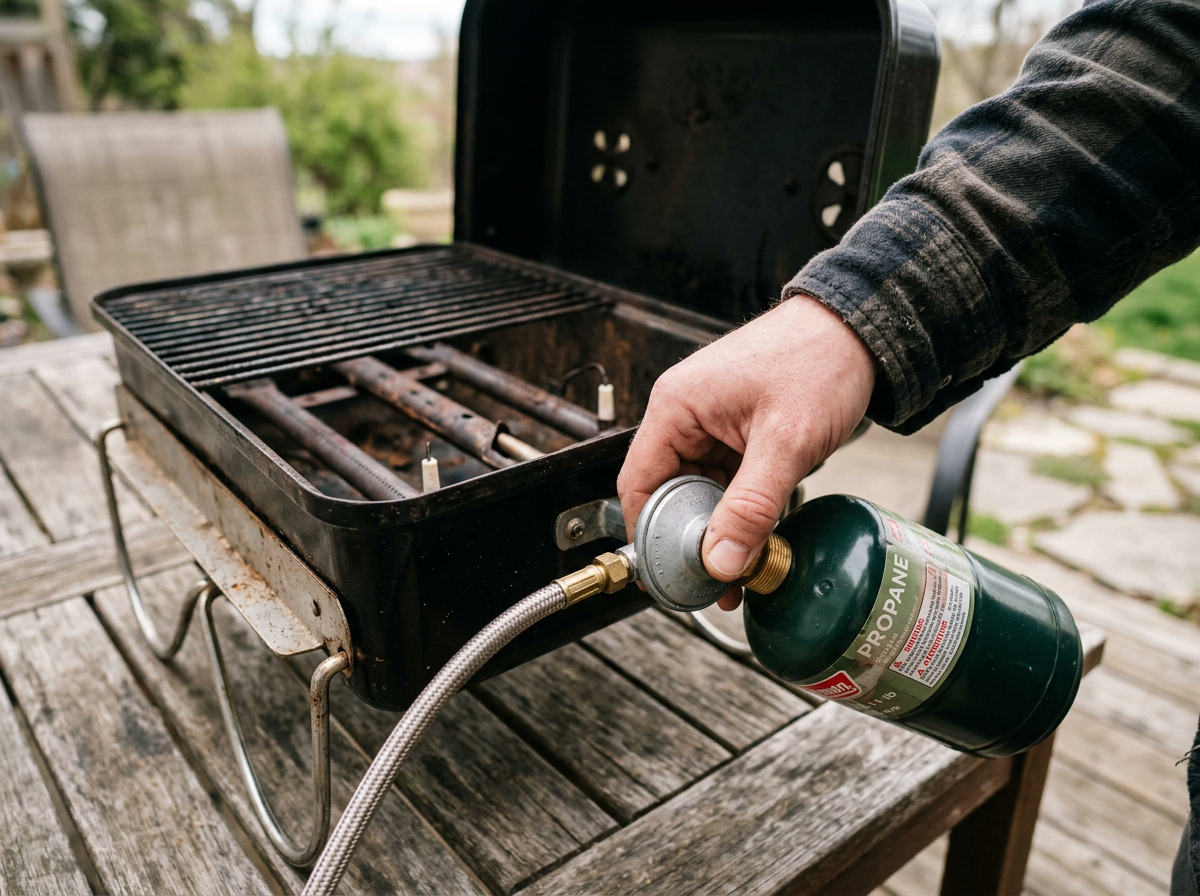
Most tabletop portable propane grills land somewhere between 150 and 280 square inches of primary cooking space. That’s enough for:
- 150–180 sq in: Two to four burgers, a couple of chicken breasts, or a small fish fillet. Tight but workable for two people.
- 200–280 sq in: Four to six burgers comfortably. Enough room to set up a two-zone cook if the grill has two burners.
Two-burner setups are worth prioritizing if you do any cooking beyond hot dogs and burgers. With one burner on high and one off or low, you can sear and then move food to a cooler zone — the same technique that makes food on a full-size grill come out right. Single-burner grills make this impossible, and everything just sits over direct heat.
Grate Material
Porcelain-coated cast iron holds heat best and produces the best sear marks. It’s also heavier and slower to heat up. Stainless steel grates heat faster but don’t retain heat as well — if you’re cooking multiple batches of burgers, the second batch often gets less sear than the first.
Chrome-plated steel grates are common on budget grills. They work, but the coating chips over time and they’re harder to keep clean. If you see chrome grates, treat them as a sign the rest of the grill is probably value-engineered to match.
Stability and Build Quality: The Part Nobody Talks About Enough
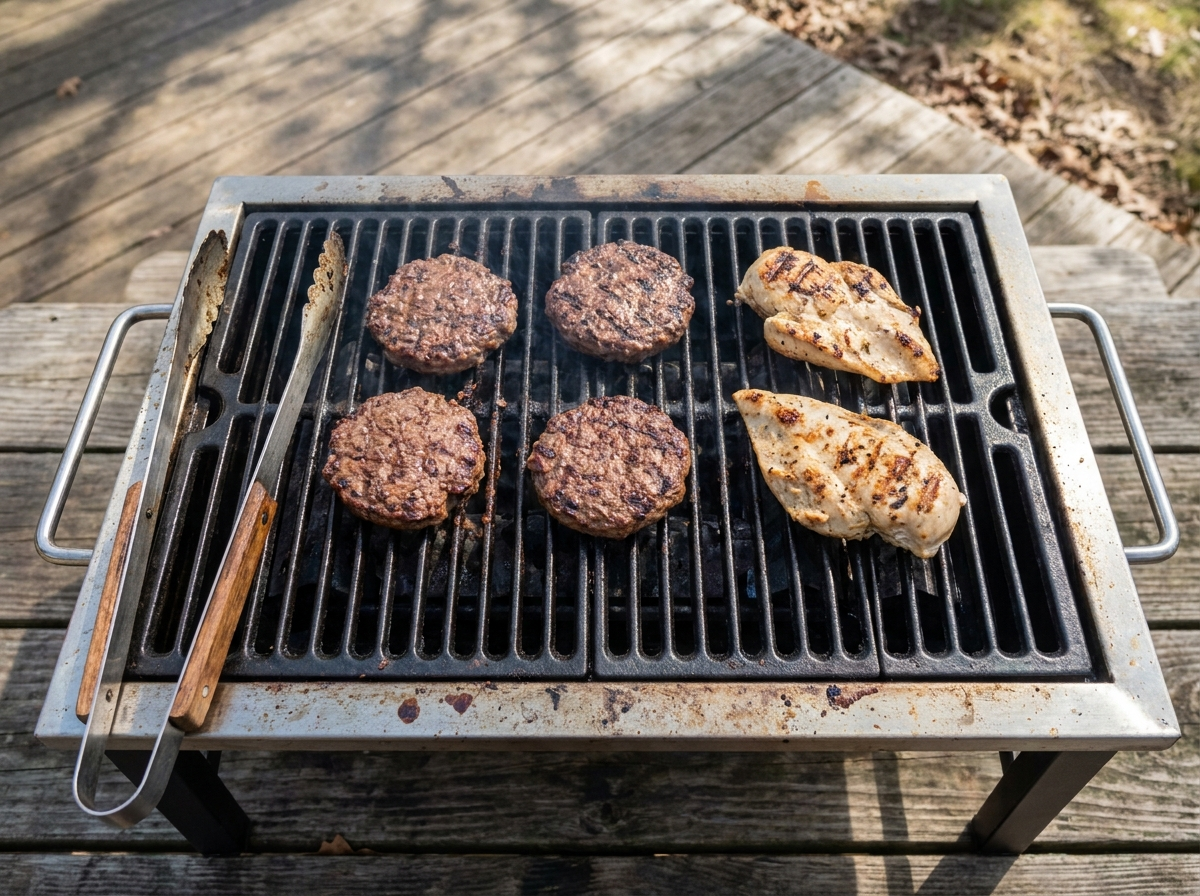
On a picnic table, this matters less. On uneven ground — a campsite, a beach, a parking lot tailgate — it matters a lot. Legs that fold flat for transport often have wobbly hinges when deployed. Before you trust a grill with a hot cooking surface near people, test the leg lock mechanism. Give it a hard shove. If it moves, it’s a problem.
The best portable propane grills have legs that lock positively into place — you can feel and hear the click. The worst have friction-fit legs that look stable until they don’t.
Weather-resistant construction is another real consideration. Side panels and lids made of cast aluminum handle heat cycling and outdoor exposure far better than thin stamped steel, which warps and rusts faster than you’d expect.
Fuel: 1-lb Canisters vs. Adapter Hoses
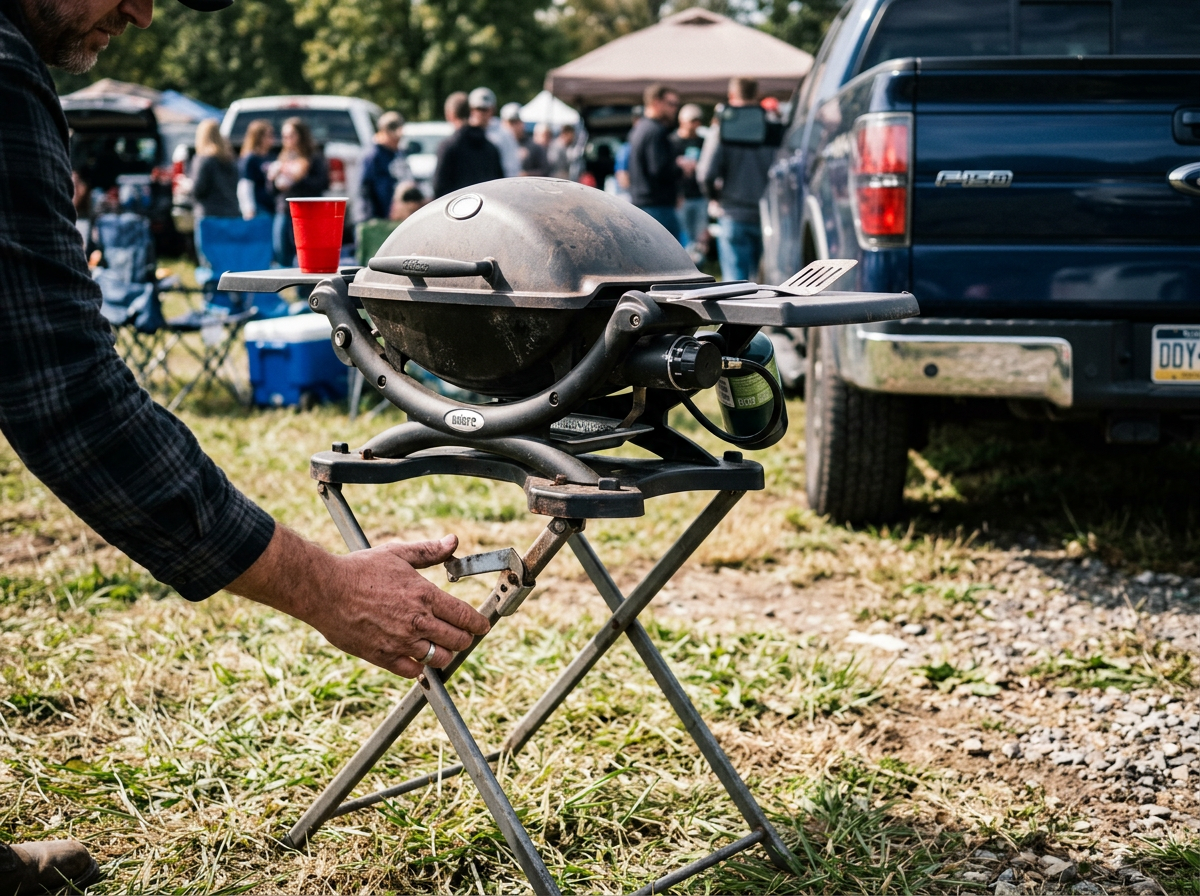
This is the practical question most people run into after they’ve owned a grill a while.
1-lb canisters are convenient. They’re widely available, you don’t need a hose, and they make the whole setup truly compact. But they’re expensive per BTU compared to a standard tank, and a single canister on a higher-output grill can run out faster than expected — sometimes mid-cook.
Adapter hoses that let you connect to a standard 20-lb tank are available for most popular models. They cost a little upfront but pay for themselves quickly if you use the grill regularly. The drawback is portability — you’re now dragging a big tank around, which changes the whole character of the setup.
For car camping and tailgating, the adapter hose approach makes a lot of sense. For backpacking or situations where every pound counts, you’re stuck with the canister.
Getting Better Results on a Portable Grill
Small cooking surfaces punish impatience. Here’s what actually helps:
Preheat longer than you think. Small grates take time to absorb and stabilize heat. Give the grill at least 10 minutes with the lid closed before you cook anything. Most people open the lid at five minutes, see orange flames, and start cooking — then wonder why nothing sears properly.
Dry your proteins. Moisture on the surface of meat creates steam, which fights against the Maillard reaction you want. Pat everything dry with paper towels before it goes on the grate.
Don’t crowd the grate. It’s tempting to fill every inch. But crowded grates trap steam, lower the surface temperature, and make it hard to manage flare-ups. Cook in batches if you need to.
Use a two-zone setup whenever possible. Even on a single-burner grill, you can push coals — well, flames — to one side by positioning food away from direct heat for a rough indirect zone. It’s imperfect, but keeping one area of the grate clear gives you somewhere to move food that’s threatening to burn.
Wind management is real. A portable propane grill in a crosswind is a different beast than the same grill in calm air. Position the grill so the wind hits the side or back, not the burner ports directly. Some grills have better wind shielding than others — deep side panels make a noticeable difference.
Cleaning and Storage
Brush the grates while they’re still warm — it’s three times easier than scrubbing cold, hardened grease. For cast iron grates, a light coat of cooking oil after cleaning prevents rust. When you store the grill with a canister attached, the canister valve should be closed. Don’t store propane canisters inside a vehicle or enclosed space.
If you use an adapter hose, disconnect and cap both ends before packing up. Propane fittings are durable but get damaged by grit and dirt if left open in a gear bag.
A portable propane grill is one of the most genuinely useful pieces of outdoor cooking equipment you can own — not a compromise version of a real grill, but a capable tool in its own right. The learning curve is short. Preheat properly, manage your fuel, and give the grill time to do its job. That’s most of it.
Leave a Reply