Disclosure: This page may contain affiliate links, which means we may earn a small commission if you purchase through them, at no extra cost to you.
Oklahoma Joe Smoker: What It Is and How It Works
The Oklahoma Joe smoker has a reputation that stretches well beyond its price point. It’s one of those pieces of backyard equipment that serious pitmasters recommend without hesitation, and weekend cooks stumble onto by accident and never look back from. That reputation comes from a specific design philosophy — offset smoking — that produces results a standard kettle grill or pellet cooker simply can’t replicate.
Here’s what you actually need to know.
The Core Design: Offset Barrel Smoking
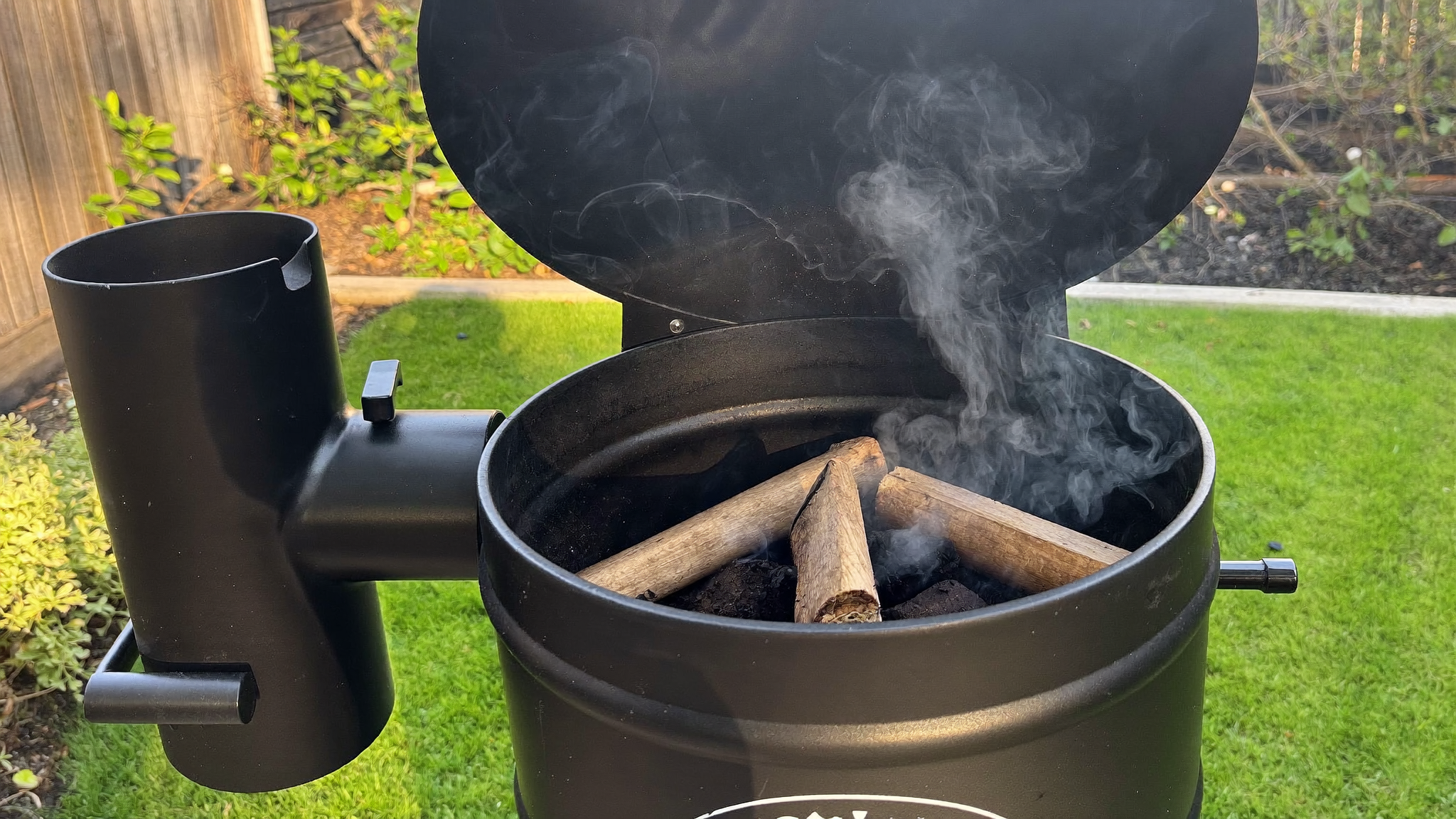
The defining feature of an Oklahoma Joe smoker is the offset firebox. The main cooking chamber is a horizontal steel barrel. Mounted to the side — and slightly lower — is a smaller firebox where you actually build and feed your fire.
Heat and smoke travel from the firebox, through an opening into the main chamber, across the cooking grates, and then exit through a chimney on the opposite end. That path is everything. It means your food is never sitting directly over the flame. You’re cooking with convective heat and smoke, not direct radiant heat. That’s how you get bark, smoke rings, and tender rendered fat on a long brisket cook.
The chimney placement on the far end from the firebox isn’t arbitrary. It forces hot gases to travel the full length of the chamber, which creates more even cooking and maximizes smoke contact with the meat. Adjusting the chimney damper changes how much draft you create — more draft means more airflow, higher temps, and faster combustion.
Fuel and Fire Management
Wood and Charcoal
Offset smokers run on wood, charcoal, or a combination. Most experienced cooks start with a charcoal base for heat stability, then add splits of hardwood for smoke flavor and temperature management. The charcoal gives you a reliable bed of coals; the wood chunks or splits add flavor and help hold temps without wild swings.
Wood choice matters more on an offset than on any other style of smoker. Because you’re adding fuel throughout the cook, you’re continuously introducing smoke. Oak and hickory are workhorses — versatile, widely available, and they don’t overwhelm most proteins. Fruit woods like apple or cherry add color and a mild sweetness that works well with pork and poultry. Mesquite burns hot and produces an assertive smoke that can turn bitter on a long cook; use it sparingly, or mostly in the coals rather than as active flame.
Fire Management Is the Skill
This is the part no one can skip: managing a fire in an offset smoker is a real skill that takes time to develop. Unlike a pellet grill that holds temperature automatically, an offset demands attention. You’re monitoring the fire, feeding it before it drops too low, watching the color of smoke coming from the chimney, and adjusting both dampers as conditions change.
Blue or thin white smoke is what you want. Thick white or gray smoke means incomplete combustion — often from adding cold, wet wood or smothering the fire. That kind of smoke makes food bitter and acrid. Letting the fire breathe, using dry seasoned wood, and adding smaller pieces more frequently (rather than large chunks all at once) keeps combustion clean.
Temperature swings in the 225–275°F range are normal and manageable. Chasing a perfectly flat line on a digital thermometer will drive you crazy and doesn’t actually matter much. Meat is forgiving over long cooks.
The Temperature Gradient Problem — and How to Work With It
Here’s something the marketing photos don’t show you: the end of the cooking grate nearest the firebox runs hotter than the far end. Sometimes significantly hotter on cheaper or thinner-gauge units. This is a natural consequence of the design.
There are a few ways to handle it:
- Rotate your meat partway through the cook. Move what’s near the firebox to the chimney side and vice versa.
- Use a water pan in the hot zone near the firebox opening. It acts as a heat sink and adds moisture to the chamber.
- Use the gradient deliberately. Put items that need a harder sear or faster cook near the firebox. Put delicate proteins or items you want to hold at lower temps near the chimney end.
Some cooks line the main chamber grate with fire bricks along the firebox side to baffle direct heat. It works. You lose a little grate space but gain a more even cook zone.
What Cooks Best on an Oklahoma Joe Smoker
The offset design was built for low-and-slow cooking. The strongest results come from:
Brisket — The flagship. A full packer brisket at 225–250°F for 12–18 hours develops bark and smoke penetration that’s genuinely hard to match on other equipment. The long cook time gives the connective tissue time to break down into gelatin.
Pork shoulder / pork butt — Forgiving, hard to ruin, and spectacular when done right. Fat renders slowly, the stall teaches you patience, and the pull test at the end is always satisfying.
Ribs — Spare ribs or back ribs both work well. A 5–6 hour cook at around 250°F produces bite-through texture with good smoke ring. You have room for multiple racks, especially if you use a rib rack accessory.
Whole chicken or spatchcock chicken — Great at higher temps, 325–350°F. Skin renders and crisps in a way it doesn’t in a sealed drum or egg-style cooker.
Sausage links — Phenomenal. The smoke penetration on a properly made link is different on an offset — deeper, drier exterior, snappier bite.
Maintaining Your Smoker
Steel rusts. That’s the starting point for understanding offset smoker maintenance.
After every cook, once the unit is completely cool, brush out the ash from the firebox. Ash holds moisture and accelerates rust from the inside out. The cooking chamber needs less attention — a light layer of grease on the grates actually protects them — but accumulated grease drippings in the bottom should be cleaned out periodically to prevent flare-ups and off-flavors.
Season the firebox and main chamber interior with a thin coat of cooking oil after cleaning. High-smoke-point oils work best. Run the smoker empty at moderate heat to bake it in. This builds up a protective seasoning layer similar to cast iron.
For the exterior, keep it out of the rain when possible. If it lives outside year-round, a fitted cover is worth having. Touch up any areas where paint chips or surface rust appears before it spreads — wire brush, high-temp paint rated for direct flame contact, and you’re done.
Getting Started: First Cook Advice
Don’t attempt a 14-hour brisket your first time. That’s a recipe for frustration.
Start with chicken thighs or pork ribs. They cook in a manageable window — 3 to 5 hours — long enough to learn the fire and temperature dynamics of your specific unit, but short enough that mistakes don’t cost you a full day.
Get two thermometers. One near the chimney end of the grate, one near the firebox end. You’ll immediately see the gradient and understand what you’re working with. The built-in lid thermometer on most offset smokers reads the temperature at the top of the dome — not at grate level where your food actually sits. Don’t rely on it.
Log your cooks. Ambient temperature, wind, fuel type, how often you added wood, what the temps looked like at each end. After three or four cooks with notes, patterns become obvious and fire management stops feeling like guesswork.
The Oklahoma Joe smoker rewards the cook who pays attention and shows up. There’s no shortcut to understanding fire, but once you get there, the results are worth every hour.
Leave a Reply